
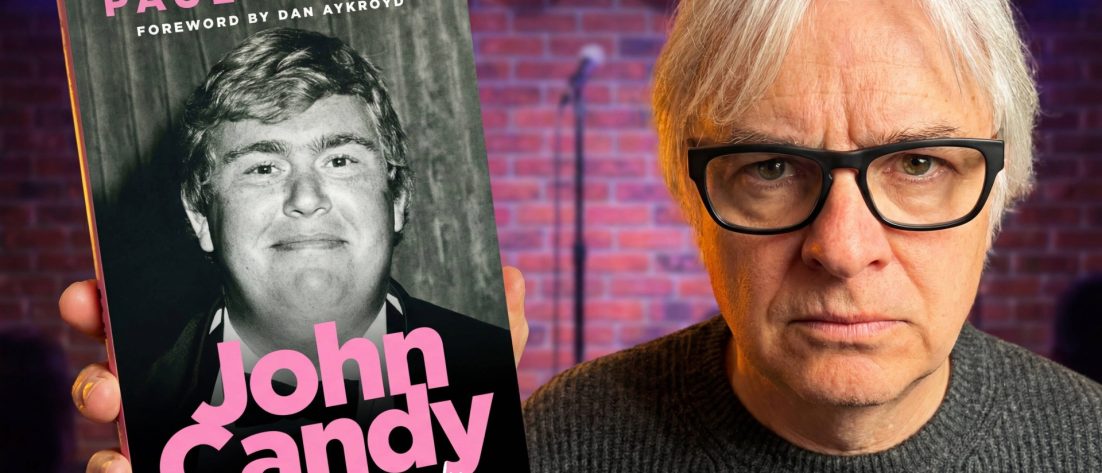
Explore the new John Candy biography with author Paul Myers. Discover powerful stories of the beloved comedian’s true character, integrity, and unforgettable kindness.
Episode Resources:
In this definitive John Candy biography deep dive, author Paul Myers reveals the untold stories behind one of cinema’s most beloved figures. While we all know John Candy for his iconic roles in movies like Planes, Trains, and Automobiles, The Great Outdoors, and Cool Runnings, what was the man behind the laughter truly like? This conversation explores the incredible highs and heartbreaking lows of his life, from his early days in comedy to the secret pain he carried.
Paul Myers, author of “John Candy: A Life in Comedy,” shares intimate details sourced from those who knew him best. This episode unpacks the complex and admirable John Candy character, a man who stood up for pay equity for his female co-stars on SCTV and famously gave his own star trailer to screen legend Maureen O’Hara on the set of Only the Lonely. We explore his creative genius, tracing his journey from the legendary stages of Second City Toronto, where he honed his improv skills and developed characters like Yosh Shmenge, to his iconic status in Hollywood. The conversation also delves into the complex relationship between SCTV and Saturday Night Live, and how a single piece of advice from Candy inspired a young Mike Myers to pursue comedy.
This comprehensive interview with Paul Myers, author and comedy historian, doesn’t shy away from the difficult moments. Discover the story behind Candy’s infamous conflict on the set of Stripes over the demeaning mud wrestling scene, a moment that highlighted his career-long struggle with body-shaming. We also explore the immense pressure he was under during his time as a co-owner of the John Candy Toronto Argonauts, a dream that ended in heartbreak following a fraud scandal. Finally, learn about the unprecedented and moving tribute from the LAPD, who shut down the 405 freeway for his funeral procession. From his most celebrated John Candy movies to the private battles he faced, this episode paints a complete picture of a comedic genius and a profoundly decent human being, based on the research from this essential John Candy biography.
About Our Guest:
Paul Myers is an author, musician, and journalist with a deep connection to the world of comedy. As the brother of comedian Mike Myers, he grew up surrounded by the industry and brings a unique, respectful perspective to his work. In this interview, he discusses the meticulous two-year process of interviewing legends like Dan Aykroyd and Martin Short for his definitive John Candy biography, “John Candy: A Life in Comedy.”
Introduction
Blaine DeSantis: Welcome to Books and Looks, where we do a deep dive with authors to help you discover your next great read. This is the last book we’re doing for 2025, and I can’t think of a better way to go than an outstanding biography. A book about one of my favorite actors, John Candy. The great comedian, born 75 years ago, died 30, 31 years ago, I think it is now. He only lived into his 40s. And yet his filmography is amazing.
Blaine DeSantis: We’re going to be talking with the author of this new book. His name is Paul Myers. He has written a great biography, loaded with quotes from the people that John worked with who knew John Candy the best. And it is just fantastic to go through some of the movies that he was in, such as Stripes and The Great Outdoors, Cool Runnings, Planes, Trains, and Automobiles.
Blaine DeSantis: John Candy was a spectacular comic and also a very fine, legitimate, serious actor. And this is going to come out. And I’m going to tell you what. This is just a fun interview with a guy named Paul Myers, who I got to say this. Knows a little bit about comedy because his brother, Mike, is a famous, famous comedian, Mike, who was in Wayne’s World and in Austin Powers. So it’s interesting and a fine, fine interview with Paul. I’ll tell you what. So without any further ado, I’m Blaine DeSantis. This is Books and Looks. And today we’re talking about the book, John Candy, A Life in Comedy by author Paul Myers. Paul Myers, welcome to Books and Looks.
Paul Myers: Hey, thanks for having me, man.
Blaine DeSantis: Very, very happy. You have a book here about John Candy, who is one of my favorite actors. And it’s been 75 years since he was born. Wow. Wow. I just can’t believe that. Was this book you have on him, was this authorized by the family?
Crafting the Biography: A Conversation with Author Paul Myers
Paul Myers: Well, it’s 31 years since his passing, too, which is also remarkable.
Paul Myers: Here’s where we’re at with it. The family didn’t participate in the book, but I did actually take the trouble. Before I got any other interviews, I went to Jennifer Candy Sullivan, who’s a lovely woman. And I said, hey, listen, we’re doing this. I’m doing this book and I’m going to be respectful. I’m going to be talking to a lot of people and I would love to talk to you and your family, including John’s widow, Rose. And she said, that’s when I first learned that they were commissioning their own documentary with Ryan Reynolds.
Paul Myers: Well, they didn’t say Ryan Reynolds at the time. They said, we’re seeking a thing we’re doing ourselves. So we’re going to keep our stories for our own film. But she said, but go, we know who you are. And because she knew the Kids in the Hall book that I’d written. And I’m of the Second City family through my brother. And so they know that I’m a straight dealer and they know that I’m not a tabloid merchant and they said, we look forward to your book but just sorry that we’re not participating but I’m sure it’ll be great.
Paul Myers: So it’s nice that I got their blessing because it made me feel good, as I continued to go and get a lot of really great interviews knowing that I didn’t have to put Jennifer and Chris and Rose on the list because they were already doing their own thing. Obviously they were welcome, I would have welcomed them if they’d said, ‘You know what, we’ll join your thing.’ But I also was looking forward to what they would do with their film, which I know contained a lot of home movies as well, so it was a little more of a personal film for them.
Blaine DeSantis: Wow. You just said that’s 31 years since he died. We see John Candy in his 40s or 30s and I just can’t imagine him being in his seventies already. That boggles my mind. It’s been that long. Wow.
Beyond the Frame: John Candy’s Enduring On-Screen Humanity
Paul Myers: It’s hard to imagine what he would look like today too. Because he may have done the Olympic thing. He may have at some point had belly band surgery. He may have been similar to John Goodman. So there’s a lot of, and again, it’s unfortunate that size was a big issue in his life and his legacy. And one of the things I tried to do in the book was, he acknowledged the suffering he might have had from being body shamed, but also acknowledged that he made you see his face and his characters almost more than his frame, which was a magic trick, if you will. The gift because he had such a human emotional intelligence that he made you think of those characters. Del Griffith wasn’t just a salesman. He was a person walking around with pain and also joy, and all those things that humans have.
Blaine DeSantis: No doubt about that and what it allowed people like me, especially, I’m a big guy myself, but a lot of people to see that, what he’s human, he’s just like us. He’s overweight, he may be having these issues but he’s out there and we related to him. I related to him from day one and it was very, very fine. Your book here is loaded with interviews and quotes from famous friends, comedians, et cetera. Do you know all these people? Do you know all these people personally? Did you know John at all personally?
A Personal Connection: How John Candy Inspired Another Comedy Dynasty
Paul Myers: I never got to meet John Candy. My brother did meet him at the beginning of his career. My brother, before he was a comedian, actually, he was a kid. And Mike asked me once, do you want to come down to see this show that John was doing, Big City Comedy, at the Convocation Hall in Toronto, which is on the University of Toronto campus. And he was going down. John had a thing called Big City Comedy, which was a spinoff. He’d left Second City Television for a year. That’s a bit of a backstory, but just basically it was a live appearance. And Mike waited at the stage door like a little kid. He was a little kid. And he said, excuse me, Mr. Candy. How would I get into comedy if I wanted to? It’s an approximation of his voice.
Paul Myers: So John Candy and Tim Kazurinsky, who was there, who’s another comedian who’s a legend also on Saturday Night Live later, John Candy said, go to Second City. They have workshops and you can learn if you like doing sketch comedy. And if it’s for you, you’ll keep doing it. And if you’re good at it, you’ll keep doing it. And you might not get a gig. You might not or you might not ever have a career outside of a few local things. But if you’re also good at it, you might also have a career. But either way, if you’re good at it and you love it, you’ll stay with it and it’ll be fun every day of your life and you’ll still be making a living, hopefully.
Paul Myers: All that kind of advice that was way more than a kid probably needed to hear, but it was super specific and useful advice, which Mike then followed through on, took Second City Workshops. And of course, I was his brother. I’m a musician. So I thought I’m funny too. And I went down and I went down and did workshops too. And it was so funny because I met two other guys at the workshops by the name of Kevin McDonald and Dave Foley. And they were already fans of my brother just from the workshops. That’s how good he was. But Dave Foley and Kevin MacDonald went on to form the Kids in the Hall.
Paul Myers: In Toronto, which is where the clubs and the theaters were, independent stuff, I was in a band that was playing the same venue as them on different nights. So I got to know the Kids in the Hall through all through this one advice from John Candy. And then the Kids in the Hall was the last book I just did before this one. So in a weird way that one meeting with John Candy, even though I never met him, led to my last two books ultimately, including this one, which is amazingly a lot of people reading this one, which is really nice.
Blaine DeSantis: It is. Well he also gave advice I saw and read with Conan O’Brien because…
Paul Myers: Yeah, Conan was trying it.
Blaine DeSantis: Yeah, similar, don’t try it, get in there and do it.
Paul Myers: Yeah, which is also what Yoda’s advice was too. No try, do. So it was Candy and Yoda, pretty much the same character in both plays. I’m sure Conan would acknowledge that.
Blaine DeSantis: Yeah, wow. So the people who you interviewed, were you familiar then, I’m assuming, familiar with most all these comedians and that you were talking to the Aykroyds and Martin Short, etc.?
Paul Myers: Well, here’s what happens. This is my fifth book and I don’t know if I have a reputation for this or just I know that I can do this, which is I make lists of the wish list, basically, of who I want to talk to. And I did a book on Todd Rundgren, the musician and producer. And in it, I said, I want to talk about the records he produced for Meat Loaf, Patti Smith, XTC, Hall & Oates, Grand Funk Railroad, Badfinger, all these people that he did albums for, including The Band. So I had Robbie Robertson on my list because at the time he was alive.
Paul Myers: And I knock them down. I get them. I find their publicist and I write a formal letter like anyone else would. And I say, here’s what I’m doing. And sometimes they don’t answer. Sometimes they answer that they can’t do it now. Sometimes I say, well, I’ll come back to you in six months. And it takes two years roughly sometimes to get everybody. And so I got used to it. And with the Kids in the Hall book I did the same thing where I would trace down people who were like Patton Oswalt, the contemporary comedian who’s a big fan of those guys, and Judd Apatow and Paul Feig and all these people who are making comedy today. And I would just track them down through the regular, not anything super secret that anyone else couldn’t do. And then in the case of John Candy, it was the same thing.
Paul Myers: I don’t think any one interview in this book was a result of my brother Mike’s connections, although I’m sure, if I’m being super honest, there’s probably a few people who see the name M-Y-E-R-S and go, I wonder if he’s Mike’s brother. And then there’s probably a few people, once they see a picture of me, go, I guess he’s definitely Mike’s brother. The only thing that helps there, because I’m aware of the term ‘nepo brother’, but at the same time I think at this point I’ve written five books and frankly gotten away with it to the point where I know how I also speak celebrity. I know how to not ask people dumb stuff. I’m not looking for tabloid dirt. I’m just looking for the story of their creative life. So to answer the question in a simple one-word answer is probably hard, but I gave you a broad idea of how it goes. It’s detective work.
Blaine DeSantis: Yeah, no doubt. Todd Rundgren, wow, there’s no, he’s no longer a youngster either, is he? Wow.
Paul Myers: No, he’s in his 70s, that’s right. I just saw him two weeks ago and he’s singing better than ever. It’s amazing, an energetic two-hour show. I think he takes Advil for his knees, that’s the only concession to age, but he belts it out and he’s got an incredible band. I would recommend seeing Todd Rundgren right now. He’s actually in a great place musically at his age, which is amazing. Not many people can do what he does.
Blaine DeSantis: No, no. A double album back in the early seventies. It’s still a classic. I love that. That’s one of my favorites. So he would, yeah, that’s something, anything.
Paul Myers: Yeah, yeah, yeah. Yeah, man.
Blaine DeSantis: Absolutely. But so the people were able to, did you have to do them all at one time? For instance, let’s just see Dan Aykroyd who wrote a little bit of a foreword for you, a preface.
Paul Myers: Yeah.
Blaine DeSantis: Did you have to sit down with him at one time or did you go back and forth to him?
The Role of Dan Aykroyd: From Comedy Mentor to Foreword Author
Paul Myers: I got to a point. I did a master interview with Dan Aykroyd that was about 90 minutes long on the phone.
Blaine DeSantis: Okay.
Paul Myers: And he was so good. The thing about Dan is he doesn’t speak, much like myself, he doesn’t speak in one-word answers. So you can get a lot of information from him, especially if he’s passionate about the subject, and he certainly is about John Candy. Dan was a great example because he’s the reason that Candy got into Second City stage in Toronto because Dan Aykroyd and Valerie Bronfield were doing comedy together and they went down to audition for Second City stage and they dragged John along.
Paul Myers: John didn’t want to do it because he said, I’m not interested in doing improv comedy. He wanted to be a straight actor, as they say, a legit actor, theater actor, dramatic actor, but he was a funny guy. So they said, come on down, you’re probably great for this. And Dan knew. He didn’t get the Toronto job, but John Candy got drafted by Del Close, a great comedy producer and writer from Chicago, and he said, we’re going to send you to the Chicago head office and you’re going to learn comedy in the town that created Second City. So this is all because Dan Aykroyd dragged him down. And over the years, they kept in touch. And John did favors for Dan, and Dan did favors for John. And they were in each other’s movies.
Paul Myers: And then at the very end of his life, when John died, there was a Los Angeles funeral. And Dan gave the most amazing eulogy that was funny as well as dramatic and worthy of a great statesman. It was one of those great speeches in my mind.
Paul Myers: I already had the transcript in the book because no one could say it better than Dan Aykroyd. And then I pushed my luck and I said, ‘You’ve been such a key figure in this story, Mr. Aykroyd.’ And I don’t get to call him Danny yet, but maybe he’ll let me know that at some point. But at this point, he was so generous to me that I said, I’m going to push my luck and ask you to write the foreword.
Paul Myers: I didn’t hear back for a week. And I thought, oh, that’s it. I’ve pushed my luck. And then all of a sudden I get an email via his assistant and it’s just what they call a PDF, an attached form with this beautiful foreword for the book. And he didn’t say anything like, he didn’t say, here you go or anything. It just appeared. And that’s the beauty and mystery of Dan Aykroyd. And so his name is on the cover of my book because of the role he played in the book. We never sat down together, but his input and his guide really helped inform the shape of the book. So, yeah, that’s a good example of it.
Blaine DeSantis: That is. Wow. Well, that’s fascinating. And they were in some movies together. But one of the things that people don’t realize, at least I guess I didn’t back in the time, was there were two Second Cities. There was a Second City down here, but there was also a Second City up in Toronto, if I’m not mistaken.
The Rise of Second City Toronto and the Birth of SCTV
Paul Myers: Well, that’s it. So what happened was Chicago is where the Second City began. And as far as I know, still has a theater. And it was an institution by the time of the 70s when they would send tours of the Second City cast from Chicago, which at the time included Brian Doyle Murray, who was Bill Murray’s brother. And Joe Flaherty was a cast member of Chicago. And Valerie Harper from Rhoda and the Mary Tyler Moore Show, she was a member of the Second City. So people like Ed Asner and Alan Arkin, they were all part of that Chicago tradition. And they would tour sometimes in Toronto and always pack the house because Toronto was a theater town.
Paul Myers: And so at one point, the producers of Second City, Chicago said, we need to open a Toronto stage. So that’s how that whole thing happened. And in Toronto in 1973 or four, the New York musical Godspell had also created a Toronto cast. So there was all this theater people like Andrea Martin and Martin Short and Eugene Levy, and they were all in that show with Victor Garber, the actor. So a lot of those people ended up auditioning for Second City when they created the Second City stage cast. So that’s why Andrea Martin ends up in Second City and that’s why eventually Martin Short ends up in Second City, Eugene Levy.
Paul Myers: It was an amazing convergence of everything. So that Toronto Second City actually created its own flavor of comedy. And by the time Saturday Night Live went on the air, they were using some of the Toronto Second City people like Dan Aykroyd and Gilda Radner. And Lorne Michaels had raided basically some of the Second City Toronto people, which is why Second City Television happens because suddenly the producers go, we can’t let them all go to the American TV show, which was a Canadian producer, Lorne Michaels. But they were getting raided, so they created Second City Television. So in a weird way, the Toronto Second City became even more culturally effective than the Chicago one because the Chicago one obviously has a super influence on everybody. Anyway, that’s a long answer. I always give long answers.
Blaine DeSantis: But that’s okay. No, the background is what we like. You know, that’s very good.
Paul Myers: Well, that’s fascinating to me. That’s the stuff that fascinates me.
Blaine DeSantis: It is. It is. And what’s interesting is John never made it down to Saturday Night Live as a, as far as I can remember, as a cast member. He may have done a guest host, but I’m not sure, but never made it down there. He may have been the funniest of all of them. And that’s amazing to me.
Paul Myers: Yeah, well, they tried. They offered and John did actually appear on Saturday Night Live a couple of times, and he hosted one time. But they even signed Catherine O’Hara at one point. They literally signed Catherine O’Hara to Saturday Night Live, and she got cold feet. She showed up in New York, and then at that moment, Second City had been off the TV for a year. And suddenly she gets a call from Joe Flaherty that NBC were offering Second City a chance to regroup on NBC. So she quit Saturday Night Live. So she almost became a cast member at Saturday Night Live.
Paul Myers: So there’s always this relationship between the two. They do two very different things and I love that Dan Aykroyd and to some extent Bill Murray comment on that in my book, because they had a mutual respect because they weren’t doing the same kind of thing. Saturday Night Live was live and politically oriented. Second City Television was filmed and taped and it was not topical at all. They sort of broadly topical, but they would also do historical sketches about historical figures. And so it was a really different show. They kind of did what they wanted. And for many seasons, a couple of seasons, they were out in Edmonton, Canada, where no suits would visit them. They were allowed to make the show they wanted. So there’s an incredible story about Second City there. Something that’s fascinated me for years.
Blaine DeSantis: A lot of the stuff, we couldn’t get Second City Toronto down here back then in the days. I’ve started watching a lot of it on YouTube and you see a lot of the performances there. You see with the Shmenge Brothers.
Paul Myers: Yeah.
Blaine DeSantis: That’s one of the classic skits that John comes up with. Tell us a little bit about the Shmenge Brothers.
From Polka Shows to Pop Culture: The Origin of the Shmenge Brothers
Paul Myers: Yeah. So John and, yeah, John and Eugene Levy created the Shmenge Brothers. And that’s a great example of Edmonton. You see they’re in Edmonton, Alberta, Canada, which I think is much more of an established town now, but in the 70s and 80s, it was still a relatively small town. And they had gotten some cash production money from a company that was based in Edmonton. So they had to move the show to Edmonton from Toronto, where they had been filming.
Paul Myers: So they all had to be camped out, basically, at a hotel in Edmonton for months. And they, away from their families, who would come to visit, but basically they only had each other. So they would spend a lot of time in each other’s hotel rooms watching TV when they weren’t working. And sure enough, they watched a local polka show. John and Eugene were watching a local polka show on some cable access channel. And they started talking like the two guys. And they decided they would be called Stan and Yosh Shmenge. And then they imagined this TV show that would happen on a small town channel called the, well, they were the Happy Wanderers. And they would talk about things like cabbage rolls and coffee. And they’d play polkas.
Paul Myers: It was funny because it doesn’t necessarily lampoon people from an unnamed Eastern European country, which they called Leutonia. They made it up. It could have been any Slavic sort of Germanic type country. And it’s loving in a weird way, even though they’re doing this funny voice and making fun of them. But it’s more a little bit of Lawrence Welk as well. And it became super popular to the point where there are many people who identified the show just for that.
Paul Myers: And then they made an HBO special called The Last Polka, which was a nod to The Last Waltz by The Band. And it was a documentary telling the story of the Shmenge Brothers. And so it became a hit character on Second City Television, rivaled only by Bob and Doug McKenzie, which was Rick Moranis and Dave Thomas’ thing that became a minor hit. Also, they recorded a single with Geddy Lee from Rush. If you needed something to be super Canadian, that’s the one right there.
Blaine DeSantis: That’s what you do but…
Paul Myers: Anyway, the Shmenges was a huge hit.
Blaine DeSantis: John, I never realized, I didn’t realize until I read your book how much of an improv man he was. He really, off the top of his head they start going places, he start talking about characters and this and that, what can we do, as opposed to, and I think you compared him with Harold Ramis who was very much the sit down, write it all out that way. But John had an amazing wit, which I think a lot of us didn’t realize.
A Fight for Equity: John Candy’s Stand on the Set of SCTV
Paul Myers: Yeah, and there was an issue in the first seasons of Second City Television that Harold Ramis, who was from the tradition of sitting down at a typewriter to write a sketch. Meanwhile, the Second City people in Toronto, remember I said they created their own version of, they had a riffing style with each other where they were, live improv comedy is writing on stage. You’re writing, you’re creating the characters, you’re creating the dialogue. You’re creating the scenarios in real time.
Paul Myers: And then what you hope to do is take the scenarios that you improvised and then shot them down and come up with the stuff that always works rather than just the stuff that doesn’t work. And you may make a tight scene out of that. And a lot of Second City reviews were formed that way where they would do an improv it and after the real show they would do a free set that was improv and they would record it and they would keep note of the things that worked and tighten it and tighten it, tighten it, then it goes into the next review that they put up, the next show sketches.
Paul Myers: So that’s an important detail. What Harold Ramis didn’t realize is that John Candy was creating stuff in real time in the writer’s room or writing on cocktail napkins and Harold didn’t see that as writing. And so when they started doing the paychecks, they had listed the cast members as actors and that some of the actors were also paid as writers so they were paid more. And then John Candy hits the roof. It’s one of the few times he blew up. He also noticed that Catherine O’Hara and Andrea Martin weren’t getting paid equally, so he became an accidental feminist because he basically stood up for them too. He said, I’m not getting paid equity here and they’re not getting it, so we need to all be paid the same because we’re all making the show up. And he got it, but it was a big sore spot for years.
Blaine DeSantis: And that’s one of his examples of how he disliked the inequality. But one of the other things that people don’t realize is what he did during the filming of Only the Lonely. He got very upset. And could you tell us a little bit about that?
An Act of Kindness: Standing Up for Maureen O’Hara
Paul Myers: Well, yes. In the same spirit. So to set the scene here, John Candy had always wanted to really pursue his dramatic side. And after establishing himself in comedies, a lot of the best ones were for John Hughes, producing, writing, and sometimes directing. But on Only the Lonely, Chris Columbus was writing, directing, and it was produced by John Hughes. And Only the Lonely gave John a chance to play this mama’s boy character who was a cop, but also was a late bloomer because he was living under the thumb of his domineering but friendly mother.
Paul Myers: And for the mother they cast Maureen O’Hara, who was an actress from John Wayne movies that Candy had loved as a kid and he had a lot of respect for her. And she comes from an old acting tradition, recognized what a great actor John Candy was. So when they first met, she says, oh, you are, I can tell you have the emotional, she didn’t use these words, but emotional intelligence. She saw it in his eyes. And she said, you are, an actress. She said it as if it was in quotes, you are an actor. You’re an actor. And whenever she talked to him, she goes, oh, the actor, the actor’s here. You’re going to be another Charles Laughton, which was at the time a very big…
Paul Myers: Cut to the chase, they get to the set. John is a big star, so he gets this massive star wagon trailer. An extra wide with all the extra stuff and a big two fridges and extra rooms on the trailer. It’s a little motel basically they gave you. And he sees that Maureen O’Hara has a little dinky trailer that they would give to a day player and she’s the co-star of the film playing his mother in many of the scenes. So he once again, years later, like the only times he ever hit the roof were inequity or standing up for somebody or himself and others.
Paul Myers: So he said to his crew, his entourage who were working with him at the time, Bob Crane Jr. who told me this story, he said, like, get my stuff out of my trailer, go get Maureen’s stuff and put it in my trailer and move my stuff into Maureen’s trailer, the little trailer. Of course, he had so much stuff that it would actually pack out the trailer. And he made a point, basically they started doing it all without Maureen knowing. He was going to surprise her so she didn’t ask for it or anything. And then he goes to the producers, he goes to the director, he goes to everybody. Finally, they have to cover themselves, they have to give John a big trailer. So they get another trailer magically. So they have a second trailer for Maureen O’Hara now. She’s got a big trailer.
Paul Myers: And Jim Belushi, who was in the film, also talked to me for this book. He said it was the most noble thing he’s ever seen anyone do. He literally would not go on until they fixed this trailer situation. And it’s, again, you think about the writer’s room story at Second City and the consistency. And he always made sure that the crew, he would often help lift tables for crew members if they were holding a door. He would say, ‘Can I help you with this crate?’ that stuff. And there’s a side note. There’s a lot of unions that don’t let the actors touch the cables. So they would always say, ‘It’s okay, John. It’s okay, John.’ But then he would go to somebody at the top and say, ‘The crew’s working too hard and you’ve got this cold meal for them. They deserve a hot meal,’ like that stuff. And he didn’t have to do that. I’m glad he did and I’m glad that the guy I chose to spend three years writing about did that because it’s worthy of me talking about him 31 years after his death.
Blaine DeSantis: You know, you talk about John and his relationship with the crew and a little before your time, but Barbara Stanwyck was similar. She had a great relationship with her crew. She always was praising them, always doing stuff for them, with them. And that just popped into my mind, the similarities between the two of them.
Paul Myers: That’s great. Yeah. No, I’ve heard of Barbara Stanwyck. Everything was good. Was she on The Big Valley?
Blaine DeSantis: She was in The Big Valley, yeah.
Paul Myers: Yeah, when I was a kid that was in reruns.
Blaine DeSantis: So yeah, she was on a lot of great, great movies. So anyway, we all have a favorite John Candy movie. Do you have one?
Analyzing the Filmography: From Planes, Trains & Automobiles to The Great Outdoors
Paul Myers: Yeah, and it’s predictable, but I feel like his work in Planes, Trains and Automobiles is a great example of everything that I talk about in the book, which is his physical comedy is second to none. His emotional intelligence is on display the whole time, even when he’s doing physical comedy. There’s a glare and a glint in his eyes that is just magical. And then without spoiling it for someone who has perhaps never seen the film, there’s a big emotional payoff at the end of the film.
Paul Myers: And it’s a very serious bit of dramatic work that John does and apparently did much more of in the original cut. But it was going long and getting a little too sad. But there’s this great glimpse of the sadness of his character that you never see until the end. And I think, by the way, Steve Martin also matches him for balance of physical comedy and gravitas. But it’s really the best script that Candy’s ever had, because Hughes, by this point, Hughes understood him.
Paul Myers: And here’s a great example. So I mentioned the Ryan Reynolds film. Colin Hanks, when they finally had their film, they called it I Like Me. And I Like Me is a scene where John Candy explodes to Steve Martin and says, ‘You know what? I like me. My wife likes me. My customers like me.’ And the reason that that scene speaks to everyone is because it’s the first time in the film we see this character who’s been berated stand up for himself, which is the theme that keeps coming up here. He stands up for the little guy. He’s the little guy in this scene. The guy in the suit, Steve Martin, is making fun or just casting aspersions on the guy saying, you’re just a buffoon. And then he finally blows up and says, ‘Dude, back off. Stay in your lane. I have dignity.’
Paul Myers: I quote that scene at the beginning of my book. And I actually had to get clearances from Paramount to do it because apparently if you use the whole paragraph you have to pay for it. But I opened my prologue of my book is called I Like Me and I had no idea that Colin Hanks was going to name his film I Like Me. But we both, I think, we both end up having the same thought, which is if there’s one scene, even in one movie that really sells what the whole story of John Candy is, is ‘I like me.’ He stood up for himself. He stood up for everyone else and the world really did love him back. It’s amazing.
Blaine DeSantis: Yeah. Yeah. See, now I go, I got one of his lesser big hits. Anytime The Great Outdoors is on, I watch that. I love The Great Outdoors. I love him and Aykroyd. I think it was Annette Bening’s first movie. And I just liked the whole thing of this big guy. But yet you could see he had a heart. He got so upset with Dan Aykroyd’s character. And yet when he heard something, ‘Oh, I didn’t realize that. I’m sorry. I didn’t know that.’ He could go back and forth. Wonderful, wonderful.
Paul Myers: Well, you know, that brings us back to Aykroyd. So the film, the best thing about that film was that at that point in their lives, you got to think about these two guys who grew up in Toronto, roughly. Aykroyd grew up outside of Toronto, but they knew Toronto and they knew what we in Canada used to call, because I grew up in Toronto, what you might call cabin life, that we called cottage life. So you go up to the lake district north of Toronto and you’re always in the pine trees and the great outdoors. And you go out on boats and canoes and stuff and you have cookouts and all those things and you go to local truck stops or whatever.
Paul Myers: For them, filming it in California, mind you, but they’re filming it and it’s in the same kind of pine tree settings that they probably all did back when they were just starting out at Second City. So for them, it was a chance to reunite. By this point, Aykroyd and him have also done road trips together where they drive across the USA listening to R&B tunes on the radio. So at this point, it’s a bit of a walk in the park for them, even though they’re both working really hard. And at one point, John has a cold because he’s been in the frozen lake for three days in a row and he’s staying up late and enjoying himself. And so he starts getting weakened immunity and starts having a cold and really sniffling. But they’re having a good time, basically. And mosquitoes are cooperating. And as you say, Annette Bening’s in that film.
Paul Myers: And that was a great example of, again, John Hughes set that up for them so they could have that moment. And John Hughes was supposed to direct The Great Outdoors, but at the same time they were going to make Planes, Trains, and Automobiles. So they flipped it with another director, Howard Deutch, who had done Pretty in Pink for Hughes. Deutch gets The Great Outdoors and Hughes takes back Planes, Trains, and Automobiles. So he’s doing back-to-back John Hughes movies at this point.
Paul Myers: So The Great Outdoors is a great, and there’s some great scenes in there like, “Big bear chase me.” And the huge steak that he eats is a challenge and a bit of a body joke. But at the same time, probably a fun scene to shoot because I’m sure they ate real steak at some point. And Aykroyd speaks so highly of the feeling they had when they worked together that he even talked about doing sequels for that film. They really and that brother relationship that they had is also a way of these two adult men who knew each other to talk about what it’s like to be similar to brothers at that point. So there was a lot of subtext to The Great Outdoors. It’s certainly one of the top 10, top five even, of Candy’s films.
Paul Myers: I also like him in Cool Runnings for the same reason. Come on, that’s spectacular. So Cool Runnings has the same thing and there’s this one great scene where he says, ‘Winning, if you’re not already in a good place, winning is not going to solve that.’ And at this point, he’d won and lost in his career several times. And so he’s also making, similar to the ‘I Like Me’ speech, he’s in Cool Runnings. He basically is a guy with something to prove, who also wants to prove that being a human first is the way to go. And he becomes a mentor to the young cast, which is what he’s playing in the movie. So yeah, there’s a lot of great moments in the career.
Blaine DeSantis: I broke down and cried at the end of that movie. When that guy’s carrying, when they’re carrying the sled down the, the frozen, the track, I’m sitting there crying. And again, John does such a great job as the coach and everything else. And very, very good. I go back to one of his earlier movies where, and this was maybe the first big, big time that he was on for a lot of screen time was Stripes. And I love Stripes. I love the poker game. I love when they’re introducing each other, but he really was upset about the mud wrestling scene that bothered him. He didn’t mind being large but didn’t like that scene. What was the problem there?
Conflict on the Set of ‘Stripes’: The Infamous Mud Wrestling Scene
Paul Myers: Well, but first I just want to say about that there’s a great scene in that where before that scene where he’s talking about why he joined the army, Ox, his character. And he wants to be a lean, mean fighting machine, which is something he really did in life. He at one point wanted to join the military when his football injury had caused him in high school to not be able to play football. But he wanted to go to boot camp in the United States, even though he’s Canadian. And he wanted to learn how to be a good Marine and also get in shape.
Paul Myers: And so the weird thing is, without knowing that, that shows up in the script for Stripes about how Ox joins basically to lose weight. And it’s also, again, another one of those dignity speeches where he’s saying, here’s who I am. I’m Ox, and I want to become a lean, mean fighting machine. And to me, I loved him from the minute. And a lot of people first saw that, they had never seen Second City Television at that point. And that was the first time they saw him on screen and they loved him immediately. People loved him when he was in that movie.
Paul Myers: So but then that scene you speak of, I talked to Ivan Reitman before he passed away. Obviously, Ivan Reitman was involved, it’s his film. And he says he didn’t know that John Candy didn’t find it very dignified to do that. At least he told me that anyway. He passed away so I can’t follow up with him now. But according to Dave Thomas from Second City, who was in the film, and Joe Flaherty, who was also in the film, they witnessed him being very upset because if you don’t know, if you’re listening, there’s a scene where they’re at a bar, all the soldiers are at a bar, and it’s a wet t-shirt night, but it’s actually mud wrestling with bikini-clad women. So there’s a big pit of mud, women in bikinis. So John’s already a little uncomfortable with the idea of the blatant sexual exploitation, but it was the 80s and I guess everybody thought you had to do it because of Animal House and Porky’s and all these things.
Paul Myers: But the thing that got him was they wanted him in his long johns. Basically, originally they wanted him to be in his underwear and they wanted the joke being basically that he’s a, quote unquote, a fat man rolling around with bikini-clad women in the mud, which is ultimately very demeaning for everybody involved. So he was a good soldier. I don’t mean in the character, but John Candy was a good soldier in that he said, ‘Okay, I know what this joke is based on, but I’ll do it.’ But between takes, he would tell his friends, ‘This is gross. This is stupid and I wish they weren’t asking me to do this. I’ll do it because Ivan asked me to.’ But he didn’t really love it. And then in press later, he sort of doubled down on trying to act like it was fun. He said, ‘Who wouldn’t want to be in a pit with a bunch of naked women?’
Paul Myers: And at the same time, this is a family man. He’s already a family man. He’s already married and he’s got a kid. He’s not that guy. And he’s an actor, though. He’s an actor and he’s got a part that’s kind of gross. And you got to understand the shaming, that body shaming was just open. See, they didn’t even have the word body shaming yet. You wouldn’t even know to tell someone off for body shaming because it was just so open season. Reviewers would say to his face or interviews would say to his face, ‘So you’re a big fat guy. You’re unattractive. How do you get the ladies?’ And you can see these interviews on YouTube now where he’s looking at the camera, John, like, ‘Can you believe they’re asking me this dumb question?’ So the climate of being able to fight back and stand up for dignified comedy, it was hard. It was hard in those days. And I don’t think anyone had the language for it. I don’t think they had the skills, the language, or the agency to do it.
Blaine DeSantis: Yeah. No doubt about it. Well, he was also extremely generous. In the sense that he was always buying food, always buying drinks. He would go out, he would open the clubs, close the clubs. That had to take a toll upon him, had to take a toll upon him, that lifestyle. And he even tried to diet during this whole time period.
The Personal Toll: John Candy’s Struggles with Health and Lifestyle
Paul Myers: That’s the…
Blaine DeSantis: The Pritikin diet or something.
Paul Myers: Pritikin diet, yeah. Carl Reiner, the great Carl Reiner, turned him on to this diet that was based in California where it was low carbs and lots of exercise. It’s variations on the Atkins diet and the keto diet and all these. And it was basically trying to monitor. There’s a lot of science in those things that work, but they don’t work if you’re also eating pizza in the middle of the night.
Paul Myers: So this is the problem. He wanted to acknowledge to himself, even for his own sense of well-being, that he was going to try and take care of himself, but he also, what we now would call medicated himself. Late at night, he felt like he deserved a treat and the treat was eating a whole steak or bowl of spaghetti and then maybe drinking a few sugary cocktails. And so it’s not conducive to weight loss, especially if you’re predisposed towards gaining weight.
Paul Myers: It was the constant almost denial that he had about that. He got the Pritikin-approved meals in his fridge in his trailer, but he’s also got pizzas and subs wrapped in his trailer and Smarties and chocolates. He just wasn’t doing himself any favors. There was an element of that. Nowadays we would have had, I don’t know what he would have had now, but I feel like nowadays there would be a lot more consciousness and professional help for both the science of why you’re eating, the mental health of why you’re eating at night, and also just a real sense of how to actually stay healthier.
Paul Myers: He always felt like he was living on borrowed time, too, because his father died of a heart attack at the age of 35 when John was five years old. There’s a sense of genetic inevitability that colors a lot of his life. The fact that he lived to 43, he already felt like he’d beaten the odds. But I’m sure at that point he had hoped that he had.
Blaine DeSantis: Well, one of the things, and one of the things that I don’t know if it was a contributing factor or not, but he got involved with the Toronto Argonauts, bought the Argonauts, helped one of the minor parties, along with Wayne Gretzky, jetting everywhere here and there with the team, doing everything with the team. And he’s also trying to keep up his acting thing. That schedule had to be a killer for him. And then add to the fact that the major owner, McNall, I think was his name, was convicted for fraud and everything else. It had to be a devastating psychological thing upon him. Can you tell us a little bit about his football escapade?
Johnny Toronto: The Dream and Heartbreak of Owning the Argonauts
Paul Myers: Yeah, well, I mentioned earlier that in high school, John, being a big guy, had immediately been drawn to football. And he played high school football. And his heroes were the Toronto Argonauts of the Canadian Football League, even as a kid. And he would always get season’s tickets from people who had them or win tickets from a local grocery store contest. And he loved going to see the Argos. That’s what they called the Argos, the Argonauts.
Paul Myers: So keep that in mind. He gets a knee injury in high school. That is the reason he even got into theater is because his football career was ended in high school because of this knee injury that was so severe that he really couldn’t play again. And so he kept that in the back burner. It’s sort of like a Citizen Kane story. He lost his sled, if you will, if you follow me. But then, years later, he’s living part-time in Los Angeles and he’s the toast of the LA Kings games for hockey. And LA Kings are owned by Bruce McNall and they’re playing at the Forum. And he’s a regular at the Forum Club and McNall likes celebrities, so he invites him all the time to these big parties.
Paul Myers: And John’s got some new money and Gretzky’s got some new money because he’d just been signed from… he came down from Edmonton. By the way, it’s so funny that Candy also worked in Edmonton for a while with Second City. So it’s like the two of them had a little similar arc there. So Gretzky then tells him that McNall’s thinking of buying the Toronto Argonauts as an acquisition, but he wants to get two people to join him, and Gretzky’s going to do it, and he wants Candy to do it. So the three of them buy the Toronto Argonauts, and they actually do really well.
Paul Myers: They bring a sense of show business to the games. They pack out the newly built Sky Dome, which is the dome stadium in Toronto, and they start making Toronto care about the CFL again. And he also ends up being an ambassador across the league going to all these other cities in Canada. So this is what you’re talking about. So he’s fulfilling a dream of bringing the Grey Cup, which is the Super Bowl of Canada, to the Toronto Argonauts. And he does. He buys Rocket Ismail, a very expensive football player. He tries to buy other ones, including Joe Montana. And he wouldn’t do it. His price was too high, so he didn’t come. But he did a lot of work for the Canadian Football League that year.
Paul Myers: And I don’t know if it contributed to his death, but it contributed to his career. He suddenly wasn’t spending as much time picking scripts and he made a lot of films that were iffy around that time. And a lot of times he did things based on the fact that he had to be back in the fall to open the season. So there was a lot of that going on. And then the other thing you mentioned is when McNall turned out to be a criminal. I’m not saying something that isn’t true. He was convicted. It broke his heart. It broke Candy’s heart. He got his money out of the Argos early because it was already starting to cost him too much.
Paul Myers: He didn’t really talk to many people about his feelings about McNall at that point. He claimed that they were still friends, and McNall claimed that they were still friends. But, significantly, I couldn’t get Gretzky to do an interview. I don’t know if Gretzky still doesn’t want to talk about it. It’s interesting, because back in my home country, his own hero status has diminished lately. But anyway, that’s a whole other story. But the whole Argos thing ended both great and badly. So he did bring a winner home to Toronto. And there’s a scene in the book where Aykroyd and Dave Thomas from Second City witness John Candy walking around the Sky Dome field and the audience is cheering him. And they said it’s like watching a Roman emperor enter the Coliseum. And so they called him Johnny Toronto at that moment. Because that was, he owns the city practically. He could have been the mayor of that town.
Blaine DeSantis: Right. Wow. Well, I could ask a thousand more questions, but I got to ask you this one to wrap up the big questions. He dies, and they have a funeral service in Los Angeles. He’s going to be buried around five, seven miles away. And something happened that I never had heard happen before on their way to the cemetery. Could you tell us about that, the 405 freeway story?
A Final Farewell: The Unprecedented 405 Freeway Tribute
Paul Myers: Yeah. So he’s buried, the funeral’s up in Brentwood, and he was buried down the highway significantly. So they had to have a procession. And a lot of celebrities are at this funeral. Eugene Levy, people that live in the town, Steve Martin. And Dan Aykroyd did that funeral, did that eulogy. And they’re all in cars. And so they’re leaving Brentwood and they’re going on to the entry of the 405. Suddenly they’re on the 405 and they realize there’s no cars on the road. And a couple of them, Martin Short noticed it, I think. And Tom Hanks noticed it too. And they were like, wait a minute, there’s nobody on that.
Paul Myers: And then they look up at the exits as they’re going past them and the on-ramps. And they see that the LAPD and the California Highway Patrol have blocked off the entrances so that no cars could get on the road. So that basically it was, and I think there was police cars ahead of them that were also going ahead for them. And so they basically got the entire freeway closed for this funeral procession in Los Angeles just so they could get the procession to the final resting ground. So it was a miracle, and it was a civilian honor that not many people get. Maybe mayors and kings and presidents might get it.
Paul Myers: And according to several people in the procession who I spoke with, they think it had to do with the fact that he also played, he played characters that were like cops. A lot of times he played cops and parole officers and people that were rank-and-file law and order people. And so I think there was a mutual respect for the fact that he played the common man so well and with dignity. And also just a statement about how much, in general, people loved him, that they didn’t think twice about closing the freeway for him.
Blaine DeSantis: No.
Paul Myers: And it was very sad that he died, but very lovely when that happened.
Blaine DeSantis: Matter of fact, I even heard that when they went past some of the freeway entrances, the police were there saluting him.
Paul Myers: That’s true. That’s yeah.
Blaine DeSantis: That’s an amazing honor. An amazing honor. I heard that from several people.
Paul Myers: I heard that from two or three different people. I spoke to Marty Short and different people. Yeah.
Blaine DeSantis: Yeah. So what’s next for Paul Myers? What’s next? What’s coming up?
Paul Myers: Oh, man, I’ve got right now. I have a document that’s out of camera shot here that’s called the five things that could be the next Paul Myers book. We’re having meetings about it because I have ideas that I want to do and some of them might not be the right time and some of them might be. Right now I’m sort of getting known for writing this celebrity biography, if you will, even though it’s not a tabloid thing. But there’s other subjects that I want to write about and I’m trying to figure out if this is the time I go to throw them a left turn because I come from music journalism. So I can’t tell you, I can’t tell you what the next thing is because I have five things on the side burners that I’m just deciding which one I should. Hopefully I’ll get a nice holiday season to think about it. And then January we’ll come in working real hard because it takes a while.
Blaine DeSantis: It does. Anyway, Paul, I want to say thank you so very much for taking time out of your schedule to be with us here today on Books and Looks.
Paul Myers: Hey, it’s been a real pleasure. And it’s always great to talk to people who care about the subject and yourself. And it’s just, thank you for asking me.
Blaine DeSantis: Paul, thank you once again for being on Books and Looks. It was a wonderful time reminiscing about John Candy. Comedy and Canadian comedy, and you don’t realize how much that Second City Toronto infiltrated America and the comedians we still know and love. With John Candy to Dan Aykroyd to Martin Short to Rick Moranis, to you name them, they all come out of Toronto and Canada. It’s amazing, just really fine stuff.
Blaine DeSantis: And it was a great time. I hope folks you take the chance to get this book because it’s really very well done and it’s about a guy who I still think he could look out. I just think he would come out on the screen today looking the same way. I don’t know. I don’t think he ever aged. And I guess you can tell I’m a fan, very honest with you. So on behalf of all of us from here at Books and Looks, as well as our good friends over at BookTrib.com, I want to wish all of you a happy holiday season. We’re going to be coming back to you in January of 2026 for our fourth year. That’s right. That’s coming right up. So right around the corner. But anyway, as I always say, friends, may all your leaves be pages in a book.