

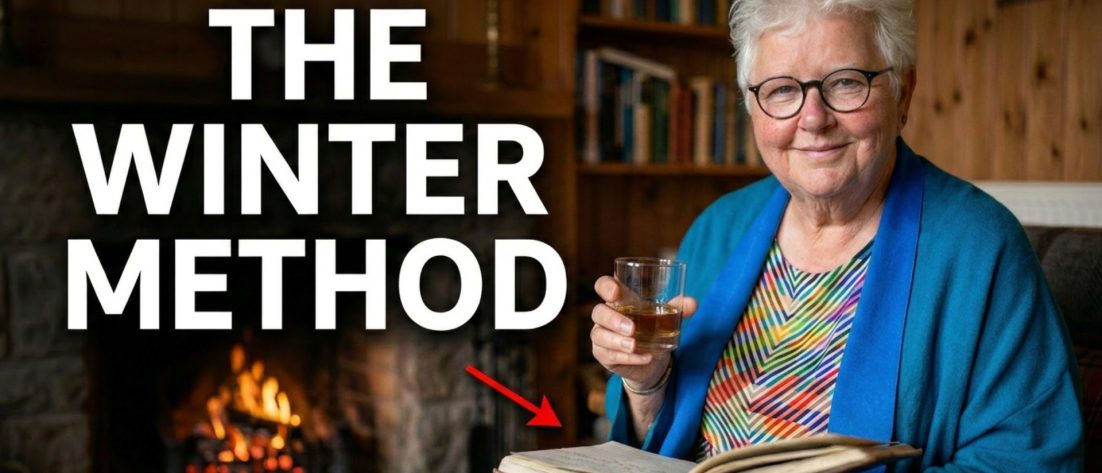
How does a legendary mystery novelist find inspiration in the darkest, coldest months of the year? In this episode of Books and Looks, Blaine DeSantis chats with renowned Scottish author Val McDermid about stepping outside her fiction comfort zone to pen her captivating new non-fiction book, Winter. Listeners will discover how the quiet chill of the season fuels her creative process and offers a cozy, nostalgic glimpse into authentic Scottish culture.
Val shares fascinating insights into her transition from working-class journalist to celebrated mystery writer, revealing how she uses brisk winter walks to shape authentic character voices and intricate plots. The conversation explores a rich tapestry of regional traditions, from the lost art of “guising” on Halloween and the culinary improvisation of “rummage soup” to the vibrant, whiskey-fueled celebrations of Burns Night. She also recounts a poignant childhood memory that shaped her understanding of mortality, while leaving plenty of intrigue about how a disastrous 17th-century Scottish colony indirectly sparked the American Revolution. Whether you’re a lifelong fan seeking new book recommendations or an aspiring author wanting to learn about the writing process, this deep dive offers a perfect seasonal escape into a brilliant literary mind.
Grab a warm drink, settle in by the fire, and check the show notes for a link to pick up your own copy of Winter. Don’t forget to subscribe to Books and Looks and leave a five-star review if you loved discovering your next great read today!
Links:
- Official Page for Val McDermid’s Winter: https://www.valmcdermid.com/books/standalone-titles/winter/
- Explore Val McDermid’s Karen Pirie Series: https://www.valmcdermid.com/karen-pirie-books-in-order/
- Guide to Burns Night and Scottish Traditions: https://www.scotland.org/events/burns-night
- Support the Cyrenians Homelessness Charity: https://www.cyrenians.scot/
Transcript
Blaine DeSantis: Welcome to Books and Looks, where we do a deep dive with authors to help you discover your next great read. Many writers have a comfort level with the genre they write in. Once they get one mystery, they keep writing mystery books. Same thing with history; they keep writing historical books.
Today we have a Scottish author who has written over 40 mystery books but is going outside her comfort level to write a wonderful non-fiction book. The topic is one that’s appropriate for this time of year. My name is Blaine DeSantis, and today we’re chatting with Scottish author Val McDermid about her new book, *Winter*. Val McDermid, welcome to Books and Looks.
Val McDermid: It’s a pleasure to be here.
Blaine DeSantis: For all of you out there, you don’t know how hard this was getting us together, but we managed. You’ll see a slightly different format because things are going kerfuffle today. That’s all I can say.
The Inspiration for Winter
But we hung through it. I did not want to miss interviewing Val because this is a wonderful book. We’re talking about her book, *Winter*. Val, you wrote over 40 mystery novels. What made you want to write this non-fiction book about winter and Scotland in particular?
Val McDermid: My publisher came to me and said that they wanted to do a series about the seasons. She’d heard me talk about my love for winter and asked if I would do it. I said, “I’m not that kind of writer. I’m not one of those nature writers who can go on about the graceful falling of the leaves and things like that. It’s not my bag.”
She said, “No, you don’t have to do that. You can do whatever you want. You can use it to write about winter in any way, shape, or form.” I thought about winter and how much pleasure I take in the season. I enjoy being out in winter weather, but I enjoy even more coming in and sitting by the fire with a wee glass of whiskey and a good book.
Blaine DeSantis: I see you have a few books behind you there.
Val McDermid: Just one or two.
Winter and the Creative Process
Blaine DeSantis: You tell us in the beginning that winter is the time you actually start preparing and maybe doing preliminary writing for all of your novels. What makes winter so conducive for that?
Val McDermid: I think there’s a variety of reasons. On the plus side, I love to go out and walk and have a think about the next scene I’m going to write or which character I’m writing. I think about what’s happening to them in their life, as well as what’s happening in the story and what will drive the story along.
I often need to go for a walk. The rhythm of walking, particularly by water, seems to provoke my thoughts and my creativity. In the winter, there are much fewer people out and about, so you don’t have to elbow your way through crowds to get down to the sea.
The other thing about winter that I love is that marvelous contrast between being outside in the cold, the wet, the damp, and the mists, and coming inside where you can take off your coat and sit down with a jumper on, nice big jersey woolly socks, a glass of whiskey, a roaring fire, and a book.
Developing Character Voice
Blaine DeSantis: That sounds pretty doggone good to me. I think I also read in the book where you talk dialogue while you’re walking at times. Does that help?
Val McDermid: That goes back to my earliest days as a fiction writer. I was still working as a journalist back then and I had an hour’s commute to work. On my hour going into work, I would have conversations with the characters to get to know them better.
I figured that was a way of understanding their lives, their passions, and how they spoke. It’s important to me to hear how my characters speak. I don’t write in dialect. I might put the occasional Scots word in, but I don’t write everything in phonetic dialogue.
What I try to do is convey with the rhythms of speech where someone is from. I listen and then repeat that on the page so that no one comes back to me and says, “That didn’t sound like a Welsh person at all.”
Winter in McDermid’s Mystery Novels
Blaine DeSantis: You’ve written over 40 books. How many of them are actually set in winter?
Val McDermid: I don’t actually know the count, but quite a few of them certainly have a chunk of winter in them. In the last one, *Silent Bones*, it takes place in winter. The heavy downpours of rain cause the side of the motorway barrier to collapse, and that’s when we find our first victim.
I’ve written *The Distant Echo*, which is the first Karen Pirie novel. That opens with a scene in the snow in St. Andrews where four students are coming home from a party in the small hours of the morning, rather drunk. They take a shortcut through the cemetery and come across a woman dying in the snow. So that is very definitely set in the winter, with snow, mist, rain, and horribleness.
Redefining the Winter Season
Blaine DeSantis: What’s fascinating about what you’d written was that, in your mind, winter doesn’t start December 21st. When does winter start for you?
Val McDermid: For me, October the 31st, Halloween, was always the first step into winter. In our country, we change the clocks. We turn the clocks back an hour in the autumn and forward an hour in the spring.
Suddenly, you’re going to school in the dark and coming home in the dark. By the time you get to the build-up to Halloween, it feels like winter. I remember going down the high street to buy things for Halloween. It was black, the streetlights were on, and it was dark and cold. Going into the shop was quite pleasant because it had some warmth to it.
The Tradition of Guising
Blaine DeSantis: Over here, October 31st is Halloween, but when you were growing up, there was something called guising. What is guising?
Val McDermid: Guising was a very common feature in Scotland. When I was young, everybody went guising. As children, you’d dress up in some form of fancy dress. You usually found that by raking through the old clothes hamper or the curtains your mother was saving. It was very much predicated on what was lying about in the house.
I went one year as Acker Bilk, the clarinetist who played “Stranger on the Shore.” The main reason was because a bowler hat had appeared in the house. It appeared on a hat peg. My father had brought it in, but he was reluctant to explain what had happened. I suspect there might have been a bit of a ruck between the citizens of the town and the Orange March.
I had the bowler hat, so that was supposed to be easy. I had a white blouse for school and black ski pants. My cousin had a full traditional Scottish country dancing garb, complete with the kilt, the sporran, and the socks with the wee flash. That came with a waistcoat, so I borrowed his waistcoat for the night.
Me and my pals went around the streets. You’d knock on doors and you didn’t say trick or treat, because that’s just asking for something for nothing. That’s a form of terrorism, isn’t it? “Give me some money or sweeties, or I’ll do something terrible to your front door.” In Scotland, it was the opposite. As a guiser, you were required to perform a song or a dance, tell a story, or tell a joke. Then you would get your reward and go off into the night to the next house.
Blaine DeSantis: Did you have a clarinet when you went guising as Acker Bilk?
Val McDermid: No. At the heart of the bagpipe, there is a small pipe, a bit like a recorder or a penny whistle. You play the notes through that. You do the thing with your elbow to keep the air through the drones and you blow the tune through the chanter. I had a chanter in the house because at one point my dad thought it would be a good idea to play the bagpipes. My mother did not agree with this.
Blaine DeSantis: I can understand that. Anyway, Acker Bilk is one of my favorites. “Stranger on the Shore” was the first UK song to ever make it to number one in America. That was just wonderful.
Val McDermid: It was. I didn’t realize it was the first ever British hit to make number one in the US. I’ll be tucking that away for the next quiz I’m putting together.
Winter Festivals vs. Summer Events
Blaine DeSantis: You also make a point that wintertime is the best time for festivals. Why do you think that’s better than the summertime?
Val McDermid: In the summertime, most of the festivals involve queuing up for tickets for hours on the internet. By the time you get them, they’ve probably gone up in price. Festivals like Glastonbury are wonderful, but they’re divisive. You have to have money to go and enjoy them. You’re probably going to get food poisoning and you’re certainly going to have to cope with terrible toilets.
In the winter, those things don’t really apply. The various bits of winter are fairly short and sweet. You don’t have to be rich to take part. Anyone can go and watch the bonfire on Guy Fawkes Night or watch the fireworks.
In Edinburgh, we have a big firework display at New Year as well. Everybody can see it. Where I live in Fife, we look across the River Forth to where Edinburgh is. There’s a whole string of towns up the east coast there, and we can see all their fireworks from our harbor wall.
It’s about being with friends and neighbors, having a wee dram in the street and a catch-up. Sometimes somebody throws a party and we all go to their house for more drink and shortbread, and somebody might start singing. It’s very ad hoc. In the summer, it always feels much more structured. I like the ad hoc nature of the New Year.
Rummage Soup and Culinary Improvisation
Blaine DeSantis: You could do some comedy writing. I’m loving “The Wit and Wisdom of Val McDermid.” My wife, who I read these books to, loved the chapter on rummage soup. What is rummage soup?
Val McDermid: Rummage soup is what you make on the day when you haven’t gone to the shops to get anything special for your tea. You go into the fridge, have a rummage around, and see what’s in the vegetable rack.
If you’re a good cook, you always have certain basics in your larder: tinned tomatoes, lentils, barley, and stock cubes. With that and a few other things, you can make a soup that’s different every time.
When my mother died, my godson came to visit and asked, “Can you make soup like your mom? Can we have some Nana soup?” He asked if I had a recipe. I said, “No, it’s just a bit of this and a bit of that.” You get lovely soups that way. You surprise yourself.
Blaine DeSantis: We’ve become so reliant on recipes that the idea of rummage soup intimidates many people.
Val McDermid: A recipe for me is just a jumping-off point. It’s where you start. When you’ve made it four or five times, you start to refine it. But with soup, you can go pretty much anywhere.
Blaine DeSantis: Do you still make rummage soup?
Val McDermid: Aye. The day before we go shopping, I’m often with my head in the fridge asking, “What am I going to have for lunch? What’s this? A slightly wrinkled carrot? Only half of that butternut squash has gone moldy.”
When I was first starting out as a journalist, I was on a very low wage and I couldn’t afford much in the way of ingredients. On a Sunday, I would make a vat of soup, and that would see me through to Friday.
From Journalism to Fiction
Blaine DeSantis: Tell me, how did you decide to go from journalism to becoming an author and a mystery writer?
Val McDermid: I knew very early on that I wanted to be a writer. I came from a working-class village. Nobody in our family had gone to university, and nobody thought about writing a book. I figured that journalism was one of the few jobs that fitted my temperament.
I’ve got a very low boredom threshold. I couldn’t bear the kind of job where I was essentially going to an office every day. Journalism doesn’t keep regular hours. You’re out there at all times of day and night, and you visit all sorts of people.
To this day, I still flick through the file cards in my head of the people I met over the years in newspapers. You meet people when something has happened. They’re either in a state of distress or they’re over the moon because they won the lottery. I stored away all those reactions, faces, and behaviors. That became my mine for characters.
If I’m thinking about a character for a particular plot, I’ll think, “What kind of person would do this? What would they look like?” Someone will pop into my head from 40 years ago, and that gives me a template. Journalism also isn’t very hierarchical, and I’ve never been good with authority. I could get out there, find stories, and write about things that were interesting to me. I regarded it as a training ground.
Blaine DeSantis: You’ve written over 40 books. How many of them are actually set in winter?
Val McDermid: Roughly, I did one a year. When I was starting out and still working full-time, it took me a couple of years to write a first draft. My only time for writing was Monday afternoons. I worked on a Sunday paper, and Monday was my day off.
I lived in the Peak District in Derbyshire at the time. I’d go for a wee walk in the dales, and then I would go up Mam Tor, which is the biggest hill around, to study the views. That would be my thinking drill. Then I’d go back and write.
I was very productive because the rest of the week, while driving to work, I was thinking about what I’d done and what needed to be changed. I’d think about where to go next with the story and who should walk through the door next to make it interesting. By the time I sat down, I was really focused.
A Formative Christmas Memory
Blaine DeSantis: We’ve got to go back to the book *Winter*. We go from having fun times with Acker Bilk and rummage soup to the Christmas of 1957. You were waiting for your “Pop,” your grandfather, to come back. What happened? It was incredibly moving.
Val McDermid: I was two and a half at the time. Scotland didn’t hugely celebrate Christmas at that time; it had been illegal in Scotland for many years. It took a long time to work up the full-scale tableaus you have in America now.
But the town council decreed that we would have lights and a big Christmas tree in the town square. My dad took me down to see the lights, and it was dazzling. I’d never seen anything like it. All these colored lights, the huge tree, and lots of people talking. I was up on his shoulders so I could see everything.
But for me, there was one thing missing. I didn’t understand where Pop was. Pop was my grandad, my dad’s dad, and he had died earlier in the year. I didn’t really understand what that meant. I was enjoying the splendor and a machine where plastic soldiers marched to “Scotland the Brave.” I was bedazzled, but I kept saying to my dad, “Where’s Pop? Where’s Pop?”
That was the evening when I realized that “dead” meant you weren’t coming back. I loved my Pop. He was a great storyteller and a lovely man. It was the first time I really came close to the idea of death.
The Traditions of Burns Night
Blaine DeSantis: You said they didn’t celebrate Christmas over there for many years. Do they still celebrate St. Nicholas Day?
Val McDermid: No, not really. New Year was always the big thing in Scotland. When I was small, my dad worked on Christmas Day. I remember waiting for Christmas dinner until he came home in the afternoon.
But we do other things, like Burns Night. It’s a celebration of the birth of Robert Burns, Scotland’s greatest poet. He was a plowman who grew up on a farm. At that time, Scotland had a very literate laboring class. His father made sure he got instructions in everything from Latin to history.
He was a wonderful poet. He wrote about everything from a mouse to the French Revolution. He wrote *Parcel of Rogues*, which is a lament against independence. He didn’t shy away from politics and had a caricaturist’s eye for people.
Every year on January 25th, we have a Burns Supper. It involves a traditional dinner, usually leek and potato soup, and then a haggis supper with haggis, turnips, and potatoes—rutabaga, I think you call them. You have a glass of whiskey, and for dessert, you usually have a fruity dumpling or something like Atholl Brose.
Blaine DeSantis: I don’t think I could get up from the table after eating that.
Val McDermid: Then you have the traditional speeches. Hopefully, you’re lucky and get a speaker who gives the toast to the “Immortal Memory” of Robert Burns with a sense of humor.
One of my favorite stories about Burns is that he was a real ladies’ man. The story goes that he and his brother Gilbert were in the farmyard and they saw a beautiful rooster. The rooster was making a beeline for the hens until somebody threw down a handful of corn. The rooster turned 90 degrees to the corn for his breakfast, and Robert Burns turned to his brother and said, “I pray to God I’m never as hungry as that.”
There is a set order of speeches. You have the Selkirk Grace to begin the meal, then the toast to the lassies, then the reply on behalf of the lassies. It’s only been relatively recently that women have spoken at Burns suppers. Then you finally have the Immortal Memory. Sometimes there’s another toast called “Peace to the People.” Then you have music and recitation of Burns’ poems. I have never seen a Burns Supper end before midnight.
The Iconography of the Forth Bridge
Blaine DeSantis: I love talking to authors from other countries. We learn so much about the culture. I wouldn’t have known about the Burns Supper if not for you.
Val McDermid: I spoke at a Burns Supper in New York once for the Caledonian Society. It was a fantastic evening, but the haggis was disgusting. You’re not allowed to import haggis because it contains parts of the animals that you don’t regularly eat. It was impossible to get a butcher who could make it there. It looked like a lump of badly mixed patty. I was very glad there was also a portion of steak pie on my plate.
Blaine DeSantis: A lot of people don’t know about the Firth of Forth. It’s an iconic bridge and a World Heritage site. You have a connection to that, don’t you?
Val McDermid: I do. My great-grandfather was one of the riveters on the bridge. He grew up on a croft on the island of Islay. His parents had more children than the croft could sustain, so young Donald went to the mainland and got a job building the bridge.
There are amazing photographs of these guys way up on the bridge with no safety harness. Quite a few men died building it. It’s a cantilevered steel structure, one of the largest in the world, and the trains still go over it every day.
There used to be an idiom that something would “take as long as painting the Forth Bridge” because the routine was that they’d finish painting it and then have to start again at the beginning. Recently, that idiom has been denied us because they developed a paint that only has to be renewed every 25 years.
Blaine DeSantis: That takes all the fun away.
Val McDermid: We have two other bridges in roughly the same place. There’s the railway bridge and the original road bridge, which looks like a miniature Golden Gate Bridge. The third bridge, opened a few years ago, has two pillars and single struts of wire holding it up. It’s white, and when you come at it out of the mist on a winter evening, it just glows through the dark like a sailing ship.
Blaine DeSantis: Did you ever find any photographs of your great-grandfather in those pictures?
Val McDermid: No. I’ve looked at all the ones I could find, but I’ve seen no one who looks like my dad’s side of the family. They have a very distinctive look. I imagine if I ran across the original McDermid boy, I’d know him.
Memories of Big Jim McHarg and Social Issues
Blaine DeSantis: We’ve got to talk about Big Jim McHarg. He was a folk singer, but what you saw was not necessarily what you got with him.
Val McDermid: I used to go to the folk clubs in my youth. In Kirkcaldy, we had a really good club. Every week, we had a guest artist—the absolute cream of the crop. We also had our regular local singers, and Big Jim was one of those.
He was a terrific guitar player and got involved with my school folk club. He used to come with us on folk weekends to some wee bothy in the country. He was always there, generous with his skills and a good laugh. I remember one afternoon he spent the whole time teaching me a very intricate instrumental by Bert Jansch called “Angie.”
He was a bit of a hero to me because he was that wandering vagabond folk singer. He’d do a gig and then go sleep on somebody’s sofa. As a teenager, I thought this was a glamorous life with no ties. It was only later I realized what this meant in actuality—that he didn’t have a home. He was what we’d now call a sofa surfer.
All of this only came into my ken when he died. I was 14 at the time. He overdosed because he was an addict. I didn’t know he had a drugs problem. He never seemed high or low; he was just Jim—genial, cheerful, and helpful. Then he just wasn’t there anymore. It was shocking to me.
It made me reflect seriously on the problem of homelessness. When I went to Oxford, I became involved with a charity called the Cyrenians. They had a barge moored on the river Cherwell as a sheltered place for homeless people.
It’s a terrible reflection on our society that in these rich countries, we still have people sleeping on the streets. During COVID, the government managed to house all the homeless, yet now I can’t walk through the town center in Edinburgh without seeing people who are clearly homeless. It’s even harder now because we mostly pay for everything on our phones, so you don’t have spare change in your pocket to help. Homelessness is one of the charities I support. For everyone like Jim, there are many more whose lives are broken.
Blaine DeSantis: Did Big Jim ever make it into any of your novels?
Val McDermid: Not as such, no.
Hogmanay and New Year Traditions
Blaine DeSantis: He’s a fine example of how what you see and what you get are two different things, as so many characters are in your mystery books. I have to go back to a holiday I’ve never heard of. I’m going to try to pronounce it: Hogmanay?
Val McDermid: Hogmanay.
Blaine DeSantis: Hogmanay and “first foot.” Let’s talk about those.
Val McDermid: Hogmanay is the eve of New Year’s Day. Traditionally, that’s when you clean the house and the men go to get their hair cut. You’d watch the TV in the evening, and there was always a variety program of Scottish country dancing and singing. It was a tartan and shortbread image of Scotland that now makes me cringe, but for millions of people, that’s all they ever know about Scotland.
Families would gather and wait for the bells at midnight. Then the party would start. The party always consisted of people singing, and people had songs they always sang. God help you if you arrived at a party and tried to sing one of the regular numbers; you would not be popular.
In the course of the night, somebody would knock on your door from outside, and that was your “first foot.” They are supposed to be tall, dark, and handsome. They are supposed to bring whiskey, shortbread, or black bun—black bun’s a terrible thing—and a piece of coal to keep your fire warm for the year.
The tradition of the coal and shortbread has eased away, but they still bring a bottle of whiskey. You give everybody in the room a drink out of your bottle and you get a drink out of theirs. If the room is big enough, you have Scottish country dancing, which is very vigorous.
Blaine DeSantis: Do you fear that we’re losing that? A lot of celebrations have been put into venues and event centers. Do you think the kids today have lost those traditions?
Val McDermid: I think we have lost a lot of it. But interestingly, there are signs that Gen Z are cleaving to these old traditions again. There have been quite a few Ceilidhs in Edinburgh over the last year or two at Hogmanay. Some are hosted by groups like the Burns Club, and some are more spontaneous.
There seems to be an understanding that we function better as a community. People are not happy with the long-term outcomes of living like an island and not knowing your neighbors.
Blaine DeSantis: I always lament that I sing little songs and my kids look at me and say, “What are you doing?” They never heard them.
Val McDermid: Media is all around us now. When I was little, we’d go in the car for a run on a Sunday to a different beach or part of the coast. My dad didn’t have a radio in his car, so we sang. That’s how I learned most of the traditional Scottish songs and even the songs in the charts, like Petula Clark. They were part of my heritage. Young people are not exposed to that in the same way.
Future Projects and Final Thoughts
Blaine DeSantis: Before I wrap this up, what’s next for Val McDermid? Are you starting a new series or more non-fiction?
Val McDermid: I’m always driven by an idea that sets fire to my brain. I just completed a novella with my partner, Jo Sharp. She was talking about a particular incident in Scottish history called the Darien Project, where the Scots tried to set up an economic colony in Panama at the end of the 17th century.
It failed, and the general view is that the Scots were hopeless and lazy. The truth is very far from that, but it suited the other side of the argument to make us out to be useless. If this hadn’t happened, Scotland wouldn’t have been bankrupted into the Act of Union and would still be an independent country.
Some of the colonists who survived went to America, to the Carolinas and New York. I like to think of them sitting in the coffee houses of New York sowing the seeds of the American Revolution. One person on the expedition, Archibald Stobo, stayed in America. One of his descendants was Teddy Roosevelt. All those years later, Teddy Roosevelt builds the kind of canal the Scots had in mind when they went to Darien.
That will be out in the summer. Then I’m writing another Karen Pirie novel set in 1999.
Blaine DeSantis: So you’re still going strong.
Val McDermid: Why would I stop?
Blaine DeSantis: The ideas are just bombarding you every wintertime.
Val McDermid: I take my heroes in that respect from people like P. D. James, who died at 93 and was still writing. I had an event with her the summer before she died and I asked, “You’re still writing, aren’t you?” She said, “Yes, dear, I am.” I asked if she was writing Adam Dalgliesh, and she said, “No, I don’t want to die in the middle of it and have one of you finish it.”
When Ruth Rendell passed, she had a massive stroke, and in her handbag was a USB drive with her final novel on it.
Blaine DeSantis: Keep writing and keep telling stories.
Val McDermid: Whatever it is you love, keep doing it.
Blaine DeSantis: Thank you for joining us today on Books and Looks. You’ve been absolutely delightful. Friends, it’s all here in this wonderful book, *Winter*. Each chapter is like its own individual essay, and it’s so great to learn about Scotland. On behalf of our partners at Booktrib.com, this is Blaine DeSantis. May all your leaves be pages in a book.