
Uncover the hidden WWII history of 600 ships sunk off the U.S. coast. In this episode, Sara Vladic discusses The Dangerous Shore and civilians who fought back.
Episode Resources:
- “The Dangerous Shore” by Sara Vladic
- The USS Indianapolis Legacy Organization
- CBS News: Discovery and History of the USS Eagle 56
- Smithsonian Magazine: The Citizen Sailors of the Picket Patrol
- The Mob Museum: Operation Underworld and Lucky Luciano
Most Americans believe the two massive oceans flanking the United States kept the home front completely safe during World War II, but the terrifying reality is far from the truth. In this episode of Books and Looks, host Blaine DeSantis sits down with author Sara Vladic to uncover the shocking, hidden history of coastal attacks and civilian heroes detailed in her spectacular new book, The Dangerous Shore. By tuning in, you’ll discover the astonishing true stories of the everyday citizens who stepped up to defend a vulnerable nation when the military simply didn’t have the resources to do it themselves.
We dive deep into the classified secrets of the American home front, exploring how over 600 ships were quietly sunk by German U-boats in U.S. coastal waters while the government maintained a strict media blackout. Sara reveals the fascinating, unlikely coalition of defenders who actively fought Axis powers on our shores, ranging from female pilots in the newly formed Civil Air Patrol to a teenager who inadvertently tracked down Nazi saboteurs in a Maine blizzard. The most compelling revelation centers on how Meyer Lansky and the mafia secretly collaborated with Naval Intelligence to protect New York’s ports – but you’ll have to listen to find out why unchecked pride and bureaucratic rivalries within the intelligence community ultimately cost thousands of civilian lives.
If you love uncovering the untold secrets of World War II history, be sure to subscribe to Books and Looks and leave us a review! Check out the show notes for a link to grab your own copy of Sara Vladic’s eye-opening book, The Dangerous Shore.
Transcript
Introduction to The Dangerous Shore
Blaine DeSantis:
Welcome to Books and Looks, where we do a deep dive with authors to help you discover your next great read. When World War II broke out, we felt protected here on the continental United States. The oceans kept our enemies far away, but not as far as we thought.
Before we knew it, there were Japanese submarines off the West Coast. German subs were wreaking havoc off the Atlantic Coast and the Gulf Shores. And who steps in to help guard and protect our country?
A most unlikely band of civilians, from the Mafia to a Boy Scout, women and senior citizens, as well as some amazing inventors. I’m Blaine DeSantis, this is Books and Looks, and today we’re chatting with Sara Vladic about her new non-fiction book, The Dangerous Shore. Sara Vladic, welcome to Books and Looks.
Sara Vladic:
Thank you so much for having me, Blaine. It’s great to be here.
Inspiration and the USS Indianapolis
Blaine DeSantis:
We are so happy to have you here. Friends, we have got a great nonfiction book for you today called The Dangerous Shore. Sara has done an amazing job of research.
Sara, this is not your first book that dealt with little-known incidents in World War II. What got you interested in that? Tell us a little bit about an overview of The Dangerous Shore.
Sara Vladic:
When I was about 13 years old, I watched a lot of documentaries with my dad. What really drew me in was the USS Indianapolis story. In one documentary, it said this was the ship that carried the bomb and ended the war and it sunk. That was it.
One line in an entire history book or documentary. I thought, “Wait, hold on, I need to know more about this.” I went to the library and there was nothing there. The mystery of that is what pulled me in.
I had family who served. My grandfather was in World War II and my uncles were in Vietnam. I lived right next to Camp Pendleton Marine Base, so the military was part of my life. The mystery of Indianapolis and why this incredible story had not been told left me wanting more.
This was before the internet, so there was no Google. I went to the library to try to find out more, but my teachers didn’t know about it. No one knew about it. When I graduated college, I decided I was going to make a movie about USS Indianapolis as a 21-year-old. Of course, I thought this would be easy. I had no idea.
I reached out to the USS Indianapolis Survivors Organization. Along the way, they invited me to their reunions. Meeting these men and the nurses that cared for them changed everything for me. These people went to moments I’d studied about in history, and it brought it to life on a personal level. That’s at the heart of this book, too.
The people. Everybody writes about tonnage and losses, but what were the stories of those ordinary folks who lived through it? In The Dangerous Shore, I go into the home front side of it. Indianapolis was the Pacific War, but this goes where very few people talk about.
These were the people that couldn’t fight—whether they were too young, too old, minorities, or handicapped. They stayed home and fought a fight that very few knew about. That includes the mafia, double agent spies, scientists, and a Boy Scout. Everyone from every walk of life joined in to fight the good fight.
Censorship and the Media Blackout
Blaine DeSantis:
You’ve taught us a whole lot in this book. I want to encourage all my followers to go out and get this book because it is a real eye-opener.
Before World War II began and when it did begin, we felt pretty isolated. We felt these two big oceans would keep us safe. As you researched it, do you think there was a deliberate blackout or down-reporting of news so that we didn’t know what was really happening right off of our shores?
Sara Vladic:
To some degree, yes. But what was really interesting about that time is there was a gentleman by the name of Byron Price who was in charge of the censorship office. It was put in place right after Pearl Harbor.
He gave the press freedom to make the decision of what protected us as citizens. He asked them to consider if information getting out to the enemy would hurt us or cause more ships to be lost. It was completely up to the discretion of the press to make the right choice.
And they did. There’s one instance where someone really blew it, and that led to the Japanese changing code and us having a greater loss at Guadalcanal. But by and large, people respected this idea that we had to protect our country and printed what was needed.
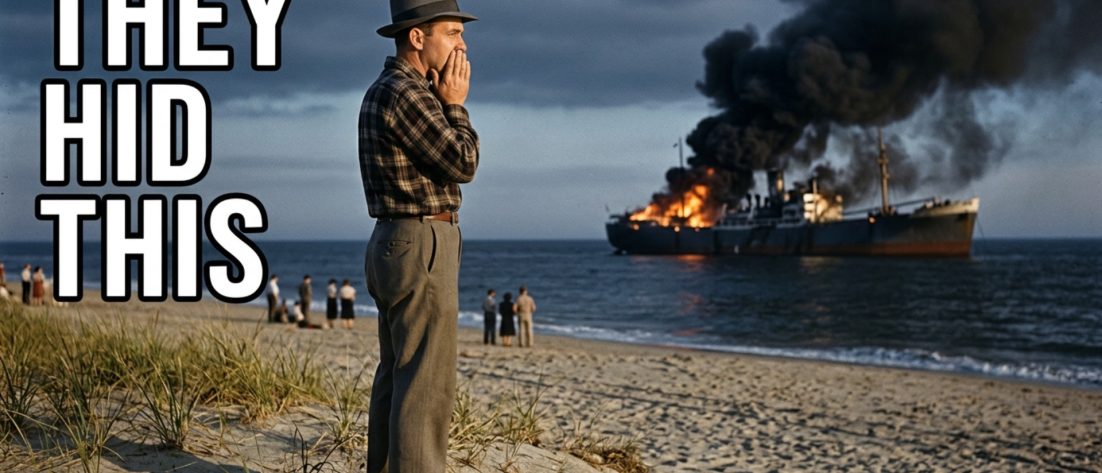
That being said, nothing was reported about the losses of ships. People had no idea that literally 600 ships were lost in American waters right off our coast. As people were sunbathing, ships were blowing up in front of them. That was not reported. I believe it was for the greater good, but it meant pieces of the story were missing.
The Oil Crisis and Coastal Infrastructure
Blaine DeSantis:
That’s one of the things people don’t realize. Regarding all those ships blowing up, a lot of oil was not getting to where it had to go. They used to ship oil from the refineries to the Northeast via the coast.
If I’m remembering correctly, Roosevelt called in all the oil men and told them we needed pipelines for our oil. That’s where this whole idea of pipelines came from. Have you read something similar to that?
Sara Vladic:
Yes, something along those lines. We were losing hundreds of thousands of gallons of oil and we had embargoes on usage. The average American was only allowed to go 40 miles a week. You had gas vouchers and that kind of thing. It led us to say we need to be able to handle our infrastructure and our oil on our own.
Blaine DeSantis:
Nobody wants to talk about the environmental impact of that either, do they?
Sara Vladic:
No, and I don’t think they were thinking about that necessarily at that time. I’m sure some were, but it was not priority number one.
The Mafia vs. the German-American Bund
Blaine DeSantis:
Before World War II began, there was a very large German Bund group in America. All of a sudden, Meyer Lansky and the mafia start organizing physical confrontations with the Bund at Madison Square Garden. Tell us a little bit about that story.
Sara Vladic:
That was a crazy story to stumble on. I was researching naval intelligence and how they were handling the defense of our shoreline, and I found that the mob helped. I eventually found the grandsons of Lansky, and they tipped me off to the fact that he had been involved before the war.
I found the interviews and transcripts Meyer Lansky did right after the war where he talks about it. A Jewish judge actually called him and asked for help because they were not able to protect themselves from getting beat up by members of this Bund.
These German-American groups formed the Bund and were doing youth camps all over America. Hundreds of kids were going to summer camp and being trained in that ideology. It was interesting to see someone of authority call in the mob for help.
The only rule was they weren’t allowed to kill anyone. There is that fine line of what’s right and what’s wrong and finding justice. I tried to present the facts so the reader can make the decision. Nobody is all good or all bad, but the mafia got involved early on with stopping this anti-Semitism and fighting the Bund.
Japanese Submarines and West Coast Defense
Blaine DeSantis:
No doubt about it. The war begins and we have some attacks by Japanese subs off of our Pacific coast. Where did this come from? Did we have a lot of citizen involvement on the West Coast?
Sara Vladic:
We did, more than most people realize. One of the main attacks was in February of 1942 when a Japanese submarine off the coast of Santa Barbara shelled the shore. They actually did damage, and that was the first time on U.S. soil that we were attacked. This happened a few times.
Right after Pearl Harbor, we were on high alert. Everyone thought they were coming for California or the West Coast next. Everyone was nervous, and alerts were saying the Japanese were coming anytime now.
I wrote the book in present tense because I wanted you to feel that urgency and that not knowing what’s coming next. They had air raid sirens going off in the middle of the night and blackouts happening that built this anxiety.
The Battle of Los Angeles happens where someone sees a plane and they fire off 1,400 rounds of ammunition. It started a riot. All this happened because they believed an attack was coming. Turns out it was a weather balloon.
Six people were killed in those kinds of incidents, but people rose to the occasion on the West Coast with coastal defense. We had the Coast Guard Auxiliary using horses and dogs to patrol the coast.
My favorite part is that we didn’t have enough ammunition or guns, so they went and raided Paramount Studios and got their prop guns. They used those to make it look like we had more weapons than we did. There was quite a bit of defense action going on along the West Coast.
U-Boat Attacks and Civilian Casualties
Blaine DeSantis:
That’s interesting. Friends, another little-known thing about the West Coast during that time was the Zoot Suit riots. That was the military against the Black and Hispanic communities, which is a fascinating insight. But after those initial attacks, did the Japanese subs just go away?
Sara Vladic:
They did come back a couple of times. They had the balloon bombs that were launched toward the end of the war in 1944 and 1945. But as soon as the Doolittle Raid and Midway took place, the Japanese attention was more focused on the Pacific and trying to stop the advancement by the Allies.
Blaine DeSantis:
That’s what this book is about—a dangerous shore. Be it on the West Coast, the Atlantic, or the Gulf, we were unprotected. We were so cocky that we were unaware of what was going on. Thank God there were civilians to help.
When the U-boats reached our shores, they started seeking oil tankers and freighters. They went after non-military targets also. How many ships did you say were hit?
Sara Vladic:
More than 600 were lost in our coastal waters. There were many more losses in the Atlantic and Pacific, but in our own waters, it was more than 600. I think it was more than 5,000 lives lost, and those were civilians. This was not our military.
Blaine DeSantis:
Indiscriminate bombing and shelling. You even relate a story about people sitting on the beach watching the flames. It was that close.
Sara Vladic:
The SS Gulfamerica was sunk right off the coast of Florida. On the shore, they were having a fireman’s ball. It was April 1942 and there were people on the Ferris wheel and at movie theaters. This was a hopping place.
They were all going about it as if there were no war. All of a sudden, Reinhard Hardegen, who was a U-boat captain, comes in and takes out the SS Gulfamerica right in front of them. The explosions lit the shore up.
Reinhard Hardegen purposefully went around the ship and shot toward the sea instead of the coast because he didn’t want to hurt civilians on shore. That was an interesting choice he made.
So much oil came on the shore from the SS Gulfamerica sinking that people said the further they walked, the taller they got because the oil and sand would build up on their shoes. Off the coast of New Jersey and the Outer Banks, people talked about watching the explosions or having glass blow out in their bedroom windows. It’s wild to think it was right there.
Uncovering Hidden History through Research
Blaine DeSantis:
We still don’t know the extent of this. Did it take a lot of research to get all this? Was it easily obtainable or did you have to do a ton of digging?
Sara Vladic:
So much digging. It started off as a very small story and it grew very big. It was about three to four years of research. Right before the book was due, I received the FOIA request I had submitted 18 months earlier. That was almost 12,000 pages of material.
I had to read all that and pull things out. Some of it was boring and some of it was amazing. It was a lot of trips to the National Archives. More than that, it was finding the families who were involved and building a relationship so they would share the stories you wouldn’t find in government files.
I wanted this to be personal. I didn’t want it to be another World War II book about tonnage lost. I wanted to know who the son was that went to war at 16 years old on a merchant ship because he wasn’t old enough to join the military.
The families gave me diaries, photographs, and handwritten notes. That includes the German side. I did a lot of interviews with German families to get their perspective on the U-boats and what it was like to be conscripted as a young kid, knowing you had a tiny chance of surviving.
The Rise of the Civil Air Patrol
Blaine DeSantis:
Sara told us she had to cut over 300 pages from this book. That’s how much material is out there. Tell us a little bit about the formation of the Civil Air Patrol, because that is a fascinating chapter.
Sara Vladic:
I love that story. It stemmed from a man named Gill Robb Wilson who had been involved in World War I. He lost his brother in that war and was very involved in aviation in New Jersey. He was there for the Hindenburg and witnessed it.
He had gone to Germany on an educational tour and saw what was happening. He was very afraid and wondered what we would do if war came to the United States. This was years before the war started, back in 1936.
He came back and realized there were going to be a lot of people who knew how to fly but wouldn’t be eligible for military service. He thought about how they could help. If our forces were overseas, we still needed transportation, mail, and fire lookouts.
He started gathering people from all over the country—African-American pilots, women, and everyone who would not be allowed to fight in combat. He essentially developed what became the Civil Air Patrol. It was initiated right before Pearl Harbor.
They got a lot of resistance from military leaders, but they proved themselves right away. These are such cool characters. One was an overweight cardboard salesman from New Jersey. He was the first to do bomb tests to see if Cessnas and Fairchilds could be strapped with bombs.
Some of the bombs were bigger than the wheelbase, so they had to drop them in the ocean before they could land because they would blow up otherwise. Then you have these women called the “suicide and sandwich squad.”
These women would sell jelly and jams on the side of the road and use that money for gas to fly planes so they could patrol for U-boats. They kept the U-boats submerged, which kept them from attacking our merchants.
It was these motley civilians that stood up. That all stemmed from Gill Robb Wilson initiating this. In Chicago, Willa Brown and her husband, Cornelius Coffey, trained pilots who would later become Tuskegee Airmen. All these people played roles that kept U-boats from attacking more. They bought us time.
Blaine DeSantis:
And it’s not like our Air Force was protecting the shores either, were they?
Sara Vladic:
No. Our Air Force was not even an Air Force yet. With the materials and manpower we had, we were barely surviving sending our forces overseas. There was nothing left here. We had something like 12 planes to do the entire East Coast. We needed help.
Blaine DeSantis:
Thank God they had women because they were flying the airplanes from where they were manufactured to the airfields. They were doing a lot of the shuttling.
Sara Vladic:
A lot of the manufacturing was transported by them, along with mail and personnel. There were also women spotters who were looking for U-boats. They were credited as some of the best in that field.
There were roles filled by women, minorities, and even teenagers that had never been filled before. The Civil Air Patrol started training kids in school, which eventually became our Air Force. They were integral in building that.
Intelligence Rivalries and the Race to Break Codes
Blaine DeSantis:
That’s the one thing I like about this book—you go back and forth between code breakers, rocket scientists, mobsters, and saboteurs. Was that hard to weave together into one narrative?
Sara Vladic:
The short answer is yes. It was a lot. I started with one ship, the Eagle 56, and it branched out from there. I worked backwards from the branches, which helped.
I also had an amazing assistant named Sherry who kept me sane. We used a software called Scrivener, which helped me keep thousands of pages of research organized. When I first started this, my editor thought I was crazy.
I had a fantastic editor, Mauro DiPreta, and he was like, “You want to do what? And in present tense, are you sure?” But it did come together.
Blaine DeSantis:
There were also rivalries between the American intelligence community. We had Naval Intelligence versus the FBI. You also had code breakers who were resistant to new technologies. How much did this conflict hinder our war effort?
Sara Vladic:
I think it hindered us more than we realize. This was a look at how human humans are. Greed and pride came before preventing loss of life. That happened time and time again.
It was important for me to put that out there so readers could ask what they would have done. You’d like to believe you’d be the good guy and make the right choice. But if your family, livelihood, or dignity were at risk, pride becomes a big part of the decision.
People and the choices they make are never black and white. That’s what’s so interesting about history.
Blaine DeSantis:
The code breakers story is interesting because of the lady who was in charge of them. She was a legend, but she did not believe in computers. Tell us about that.
Sara Vladic:
Agnes Meyer Driscoll was brilliant. She was literally breaking codes in the 1920s and 30s that people wouldn’t be able to do now without computers. But she was very stuck in the idea that everything should be done manually.
When the Germans introduced the Enigma machine, it had billions of possible outcomes. She was trying to do this by hand and she just wouldn’t evolve. Her pride pushed us back and delayed us probably six months to a year in breaking the codes. Those were the critical first months when we were losing 600 ships. It probably could have been prevented had she accepted technology sooner.
Blaine DeSantis:
The Brits didn’t want to give us what they knew either. They wanted us to figure it out ourselves.
Sara Vladic:
That was so interesting for me to learn—just how much we did on our own. There was involvement from someone like Tiltman, who was good at bridging the gap across the pond. But truly, it was our own independent effort that had such a huge role in code breaking.
We never get credit. Turing and Bletchley Park get the credit, but it was in fact the American bomb that allowed us to break the four-rotor Enigma almost in real time so that we could predict where the U-boats would be.
They had to be very careful not to let the enemy know we had this information, because then they would change everything. It was a very cat-and-mouse game.
Operation Underworld: The Mafia in New York Harbor
Blaine DeSantis:
I have to go back to the mafia. The war starts and there’s a knock on the jail cell because Lucky Luciano is in prison. What did the mafia do this time?
Sara Vladic:
Lucky Luciano was the boss in prison, and his bestie, Meyer Lansky, was the one who was boots on the ground. There’s a lot of gray area in whether the mob influenced Naval Intelligence or vice versa.
It all started with the SS Normandie, which was a luxury cruise liner we were converting into a troop ship. All of a sudden it was damaged in New York. There were suspicions the mob was involved, though there was no proof.
That was the inciting incident. A guy named Charles Radcliffe Haffenden was all about working with the mob. He knew the only way to find out what was going on in our ports was to talk to the longshoremen, and the longshoremen were run by the mob.
Meyer Lansky and Socks Lanza were meeting at Dinty Moore’s in New York talking about how to get Lucky Luciano out of jail. Lansky’s daughter was five at the time, and she remembers this meeting about getting “Uncle Charlie” out of jail.
Secret meetings started happening in the middle of the night at Grant’s Tomb in New York with the District Attorney and Naval Intelligence. Socks Lanza said he was all in. They were more concerned about being called disloyal to America than they were about being called mobsters.
Our Naval Intelligence officers went undercover as waiters, taxi drivers, and gas attendants to watch our ports. It’s essentially why we didn’t have labor strikes and why we didn’t have enemies land in New York to disrupt our shipping.
Saboteurs, Spies, and a Boy Scout’s Discovery
Blaine DeSantis:
After all they did, they still deported Lucky Luciano, didn’t they?
Sara Vladic:
They did. You have to read the book to see that scene, but he did get deported years after the war.
Blaine DeSantis:
They helped a lot and at the end we didn’t do much for them. Tell us about the Boy Scout who helped. Who was he and what did he do?
Sara Vladic:
The Boy Scout was Harvard Hodgkins. He was a teenager from Maine coming home from a church party. It was the middle of a blizzard in November, and he saw footsteps.
He saw two guys who didn’t seem right. This was a small town where everyone knows everyone. These two guys were walking in suits and dress shoes in the middle of a snowstorm.
He pulled over and saw the footsteps led to the shore, meaning they came out of the water. He went home, but his dad was on a fishing trip. Meanwhile, the FBI was investigating a ship that had been sunk further north, but they had no idea spies had landed.
It was the Boy Scout who did the investigating and turned it in. By the time the FBI started searching, the spies were in New York. But he was the one who alerted the authorities. A woman named Mary Forni was also involved in spotting things. I got to talk to Harvard’s brother about the whole incident.
Blaine DeSantis:
How many saboteurs made it into America?
Sara Vladic:
We know about Operation Pastorius, which was the eight spies that landed in Florida and Long Island, and then the two that landed in Maine. But there’s a quote that we only learn about the failures. There could be more.
There were also so many informants. We don’t think of the everyday civilians that passed along notes. There were thousands of messages being passed to the enemy. There was an American woman who was sending codes through hidden messages about dolls in her shop in New York. There were thousands of people sympathetic to the Axis that we couldn’t even count.
The Sinking of the USS Eagle 56
Blaine DeSantis:
Let’s talk about the explosion on the USS Eagle 56. You were the one who uncovered this and got people to know about it.
Sara Vladic:
That is the origin story of the whole book. A friend named Kirk Wolfinger reached out because of the similarities to the USS Indianapolis. He and his friends found the Eagle.
For 80 years, the Navy classified it as a boiler explosion three miles off the coast of Maine. This was April 23, 1945, at the very end of the war with Europe. The ship exploded out of nowhere and only 13 survived.
The survivors testified that they saw a conning tower and described the symbol on it. Witnesses talked about a 30-foot geyser in the ocean. Yet it was officially a boiler explosion.
In 2019, they found the ship and the boilers were intact. The guy in charge of knowing if an enemy was around was the person they put in charge of the investigation. It suited him better to say it was a boiler explosion than to admit he missed a submarine that everyone could see.
It was interesting to have justice unravel in real time. In 2019, the record was finally corrected and they are finally honoring the guys and giving them Purple Hearts.
Future Projects and Final Thoughts
Blaine DeSantis:
What’s next for you? Where are we going next?
Sara Vladic:
That’s the million-dollar question. I have a couple of choices. It could be space, it could be the Bible, we’ll see. There is also the hope that this can be more than a book and be adapted for the screen.
Blaine DeSantis:
I could see a limited series. Sara Vladic, you have been an absolute joy to talk to. You are a wealth of knowledge. Thank you so much for being with us on Books and Looks.
Sara Vladic:
Thank you, Blaine. It was great talking with you.
Blaine DeSantis:
Friends, I cannot give a higher rating than five stars to this book. It is spectacular. She has uncovered so much information that was unknown about these people who helped protect our shores.
We’ll be back next week with another great story for you. Until that time, on behalf of our friends at BookTrib.com, this is Blaine DeSantis. May all your leaves be pages in a book.