
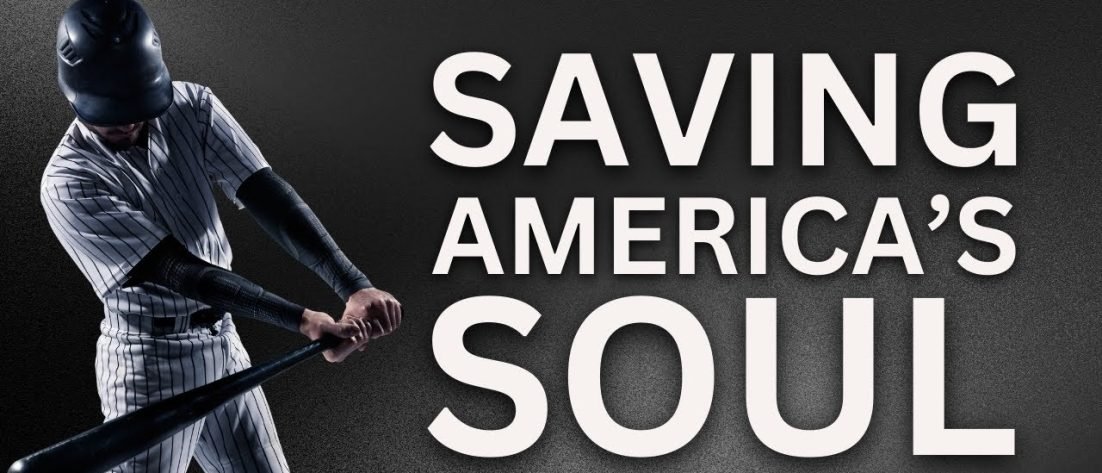
When a corporate spreadsheet erased 42 minor league baseball teams from America’s map, it didn’t just kill baseball in places like Batavia, New York – it threatened to dismantle the last institution where a Vietnam veteran finds peace, political adversaries share beers as friends, and a young man with cerebral palsy washes uniforms by hand until 2 AM. In “Homestand,” author Will Bardenwerper, a former Army Ranger, reveals what happens when profit-driven efficiency collides with our deepest need for belonging. As citizens rally to save their century-old Muckdogs, their story exposes a choice facing communities everywhere: surrender our local institutions to corporate consolidation, or fight to preserve the authentic spaces where strangers become neighbors and divided towns discover common ground.
Links:
Transcript
Blaine DeSantis:
[0:00] Hi, everybody. This is Blaine DeSantis, and I welcome you to another edition of Books and Looks. Yes, this is our weekly voice of discovery into the wonderful world of books, the best of history, mystery, fiction, and nonfiction that I’ve been reading. And along with that, each time we’re on, we have an interview with the author of those books. You’re only going to get it one place, and that’s here at Books and Looks. Hey, and don’t forget our friends, our partners over at BookTrib.com. Are you going there? That’s B-O-O-K-T-R-I-B.com. They’re great. You want a review? They’re there. They have giveaways. They’ve got things you can buy, book paraphernalia, whatever. You’re going to want to go there. And they always have my podcast there too. So that’s very much fun. Anyway, BookTrib.com. Hey, listen, today we’re going to have a great time. I think you’re going to really enjoy this one, friends, because we have an acclaimed journalist and a former Army Ranger who fought in Iraq. They’re going to take us on a journey to rediscover America’s core value in the bleachers of a minor league ballpark in Batavia, New York. You know, Major League Baseball contracted 42 teams in the minor leagues. They contracted from like 162 down to 120. And that move has helped threaten the heart and soul of small towns across the country. In his book, Homestand, author Will Bardenwerper introduces us to a vibrant cast of characters who reveal the beating heart of America and the unifying power that is there in the exploration of the community and resilience that you have with baseball. That’s right.
Blaine DeSantis:
[1:26] Homestand is just a book about baseball, sociology, localism, and nostalgia. It’s what we stand to lose in America as we sever the game’s grassroots connections that have stitched together the fabric of our nation. I’m Blaine DeSantis. This is Books and Looks, and today we’re chatting with Will Bardenwerper about his book, Homestand. Will Bardenwerper, welcome to Books and Looks.
Will Bardenwerper:
[1:51] Thank you for having me.
Blaine DeSantis:
[1:52] Will, you’ve written a book which I consider going to be a baseball classic. Deals with so many aspects of baseball, minor league baseball, small towns, sociology. It is a masterwork, and you’ve done wonderful, wonderful work. So I greatly appreciate you coming on and chatting with me about your book.
Will Bardenwerper:
[2:08] No, I appreciate those kind words, and I’ve been looking forward to this discussion.
Blaine DeSantis:
[2:12] Well, you know, you explore, this book explores the Major League Baseball’s contraction, which they did. They knocked out 42 teams and got rid of a lot of the small-town teams. So what inspired you to do this book? And then why would you pick the location, Batavia, of all the towns up in that Rust Belt and the New York Penn League? You chose Batavia, and at an opportune time, by the way.
Will Bardenwerper:
[2:38] So I initially, backing up to, I think, 2019, is when these rumors of Major League Baseball’s contraction first began to circulate. And I had played baseball all the way through two years of college. I’d always been a fan. And I’d also been traveling some of the sort of back roads of America doing other reporting projects. And it just occurred to me that this development didn’t bode well for these 42 communities that were reportedly on the chopping block. And so the original plan was going to be for me to go down to write an account of what we had expected to be the final season of the Appalachian League, which was a minor league down in Tennessee, Virginia, West Virginia, North Carolina, that had been around for a century. And it looked as if this was going to be the final summer. My publisher or my editor thought that was a really good idea.
Will Bardenwerper:
[3:34] I put together a book proposal and he was going to sign off on it, and that was going to be my book project. Well, as I think most of us now remember, what happened that January, February was COVID began to emerge, and that season all of a sudden looked like it was going to be in jeopardy, and in fact, it did go on to get canceled. So there was no summer 2020 minor league season. And then Major League Baseball did, in fact, eliminate that league. So they essentially didn’t even have a chance to say goodbye. And I didn’t have a chance to write the story of the final season. I did sort of rescue the research and reporting I had done, though, in the form of this Harper’s Magazine article that told the story of what this league had historically meant to these communities and what was being lost. And this gets to your question of why Batavia.
Will Bardenwerper:
[4:23] I got a lot of feedback, good feedback on that article, including a message from a gentleman who lived in Batavia named Bill Kaufman, who goes on to feature prominently in the book. And he said, you know, wow, this article really resonated on a lot of different levels. It reminded me so much of the experiences we have with our team up here. Would you like to come up, visit? I’ll buy you a beer, talk baseball. I lived only about four hours away from Batavia. So I said, sure, I’ll come on up. I planned a weekend trip up there to meet him. While there, he introduced me to some of his friends and fellow Batavia MuckDog fans, and they got to talking about the role of this team in their lives. And I thought to myself, you know what? A cool story might be the death of this team and then the rebirth of it in the form of this collegiate summer league team that they had rallied behind. So that’s what brought me to Batavia.
Blaine DeSantis:
[5:16] Wow. And that’s amazing because, just so people know, this is a summer league team now they have for college kids. And the kids actually pay to play in this league.
Will Bardenwerper:
[5:28] Correct. They do pay. It’s not a ton of money, but it helps cover the bus trips, for example, the uniforms, the lodging they get at a local community college. Because otherwise it would, the margins are notoriously thin in minor league professional sports or amateur sports in this case. And so otherwise, you know, the owner would probably lose money over the course of the summer.
Blaine DeSantis:
[5:53] Yeah. Well, easily, easily, especially these small towns. It’s tough enough when you have a bigger town that has it, but small towns, it’s important. So, hey, what you do is you weave these personal stories with broader economic and social commentary about baseball and life in the town. What made you choose that way to feature this, how should I say, this understanding or this investigation into minor league baseball?
Will Bardenwerper:
[6:25] I don’t know. I think the entire story struck me as being in some way sort of connected to some of these larger societal economic forces that we see in any number of different industries where, you know, it seems as if more and more money is kind of being funneled to a smaller and smaller number of people, for lack of a better way of saying it. And, you know, I think I was just particularly struck by, in this case, how you can have an industry, professional baseball, where, you know, on the one hand, they’re getting close to their first billion-dollar player. You know, one particular person who, I think now the record contract is $750 million with Juan Soto. And, you know, I don’t think it’ll be too long before we probably do get to a billion. And yet they cut these teams, any one of which would cost the major league parent organization about $700,000 to support for a season. And so I just was kind of struck by that disconnect. You know, on the one hand, there’s kind of endless money, but on the other hand, to save a tiny amount of money in the larger scheme of things, you know, we’re going to end baseball in a place where it’s been sort of embraced for over a century.
Blaine DeSantis:
[7:45] It has been. Those leagues, like you said, the Appalachian League, the New York Penn League, there was one out there in the Rocky Mountains. I know Idaho, the Pioneer…
Will Bardenwerper:
[7:54] Pioneer League, right?
Blaine DeSantis:
[7:56] Yeah. I’m assuming they got cut too. Did they get contracted also? Yeah.
Will Bardenwerper:
[7:59] And I looked into writing that story. The problem there was the geography, the distances were so, you know, you spend 10 hours to get from one place to the next. Whereas the Appalachian League, everything was pretty easy to, you know, close to each other and easy to get around.
Blaine DeSantis:
[8:13] It was. You know, they try to, they try to say, well, now we’ve got this Florida Complex League. I don’t know. I don’t think it’s the same thing. And no one goes to the games and you don’t know what’s going on. You have no idea who the players are. So I don’t know. I think they’re trying to make themselves feel better about things in a way. I don’t know.
Will Bardenwerper:
[8:33] That is kind of what I think is at the heart of this move that Major League Baseball is doing, is there’s an idea that we don’t need 160 teams spread across the country to evaluate talent. We can just pick a handful of the best players, send them to one of these complexes, run them through some different sort of NFL combine machines and use technology and analytics to evaluate and save a lot of money in the process. It’s more efficient. You know, there’s some, I think from a purely baseball development standpoint, there’s some validity to that, even though I don’t think I or other baseball people would all agree. But it completely takes out of the equation, you know, the impact these decisions will have on these communities.
Blaine DeSantis:
[9:18] No doubt about it. You write about the regulars who are there at Dwyer Stadium there in Batavia, people like Betsy Higgins, Jenny Weaver, and Ernie Lawrence. These relationships that you developed, how did that help you better understand what was going on up there in Batavia?
Will Bardenwerper:
[9:34] Ah, well, I have Bill to thank in part because he did help introduce me to some of these people. And so I got a little bit of a head start in that regard. But yeah, I think getting to know them was critical because that allowed me to really get a better sense as to the importance of baseball to these people on an individual level. And what we risk losing if we take that away, because I think the same dynamic takes place in lots of these ballparks. It’s not unique to Batavia. I just told the story of Batavia, but you could just as easily have told the story of Bluefield, West Virginia, or Burlington, North Carolina, or Billings, Montana, or, you know, any number of other places.
Blaine DeSantis:
[10:24] Well, the interesting thing about this is that, if I’m not mistaken, Betsy and Jenny, they don’t even live in Batavia. They have like around a 45-minute drive to come there.
Will Bardenwerper:
[10:32] Yeah, they live in Buffalo. And also, interestingly, they’re not even particularly big sports fans. This is like the one thing. I think Betsy said five or 10 years ago, a friend brought her to a MuckDogs game and she didn’t even really want to go because she wasn’t historically much of a sports fan. So she didn’t think she’d even like it. And she just kind of fell in love. It was like love at first sight. She fell in love with the experience. And then she convinced her friend Jenny. And now it’s like their summer ritual. They go to, they go to all the games. It’s 45 minutes each way from Buffalo. And that’s the thing that they do.
Blaine DeSantis:
[11:09] That’s, that’s fascinating. Nothing quite as mellow as sitting in a ballpark. If you’ve got a nice view, you know, a nice summer day, and never gets all that hot up in Batavia. It gets warm, but not stinking hot, like it can down in the South. So it must be a very nice setting.
Will Bardenwerper:
[11:23] It is, it is. I mean, my friends tease me because I talk about the weather so much in the book, but it’s important because especially, I mean, I thought the Pittsburgh winters were rough, but the Buffalo and Western New York winters are notorious and it’s just dark and gray and there’s tons of snow. And so those few, you know, short summer months where it’s sunny and, you know, they have these beautiful sunsets, you know, it’s something that the community there looks forward to and helps them get through those winters because they know that, you know, at the end of it, they’ll have these few months to really savor.
Blaine DeSantis:
[11:55] The MuckDogs are coming back then. So, you know, that’s what they look forward to. But you write about two people who I really found fascinating, Guy Allegretto and Bill Kaufman. You know, those stories highlighted the importance of baseball in their lives. And then Bill takes it one step further with this whole philosophy on localism. Could you tie all that together for us, please?
Will Bardenwerper:
[12:17] Yeah, they’re both wonderful people. And, you know, I was fortunate to be able to try to, you know, tell their stories in the book. Guy was a highly decorated Vietnam veteran. And, you know, ever since coming home, baseball has played an important role in his life and, you know, has provided him with this sort of source of happiness and serenity. And he goes to, you know, as many MuckDogs… he also lives near Buffalo, so it’s a little bit of a hike, but he goes to as many games as he can. And then Bill, yeah, he’s a local, you know, Batavia, or he lives one town over in a town called Elba, but he’s a, he’s a, you know, tremendous writer in his own right. And yeah, he talks a little bit about this idea of localism and kind of some of the things that can make, you know, life in a town like this, you know, particularly meaningful and special if you kind of take a step back and appreciate it.
Blaine DeSantis:
[13:15] Yeah, he really, that’s one of his big themes. And it’s very interesting because that’s what we take for granted so often, localism. Yeah. The other thing that’s interesting is most of these teams up there in the New York Penn League, most of them at one time had a rather large factory or industry that were in those towns. They’ve left, too, if I’m not mistaken.
Will Bardenwerper:
[13:40] That’s true. And it’s not dissimilar from what I saw down in the Appalachian League, too. Different industries, but in both cases, you had a number of these communities that had sort of been losing jobs in recent decades dating back, you know, even into like the 90s. And so I think that’s again part of what struck me about the importance of these teams was the fact that baseball was kind of the one thing that was still standing when a lot of other things had been taken away from them. And now when I saw baseball also being taken away, it just occurred to me that, you know, this is just, this is, this is pretty unfortunate. You know, this was kind of like the one affordable, easy to access, you know, opportunity that had, you know, traditionally brought these people together over the course of, you know, these summer nights. And it would just be a real shame if that too was sort of stripped away. And thankfully, in the case of Batavia and some of the other towns, you know, they rescued it in the form of these new teams.
Blaine DeSantis:
[14:48] You were fortunate because the owner of Batavia also owned the Elmira team in the league. And what amazed me was that when you start looking at their attendance figures, you’re talking maybe 10 to 15 percent of the city’s population come to these baseball games. That’s, that’s remarkable.
Will Bardenwerper:
[15:09] Mm-hmm. The attendance numbers were striking for his teams in particular. You know, they’re not as universally strong across the league. It really depends on the product that the owner puts out. And he and his wife, Nellie, Robbie and Nellie, do just an amazing job of trying to put out a top-notch product, despite the reality of the fact that the players are just not going to be quite as good as the drafted professionals that preceded them had been. But despite that, you know, they just do a lot of other things that make it attractive to the community, whether it’s allowing their kids’ Little League teams to come out and play catch with the players before the game, having the, you know, the school band perform the national anthem before the game, letting the kids run around the bases after the fifth inning, and just other little goofy promotions that they put on that just make sure that there’s other things to attract families to the ballpark besides just the baseball.
Blaine DeSantis:
[16:10] Including letting kids, including your own son, announce the names of the guys who are coming to the plate, if I’m not mistaken.
Will Bardenwerper:
[16:17] My son, he got a real kick out of that. And at the time, he was, I think, five years old. And so I didn’t know what to expect when they handed him the microphone. I mean, anything could have happened. But remarkably, he was very poised. And he did announce for an entire inning, each batter that came up, he would say, you know, now at bat number 22. And say their name, and he did it pretty well.
Blaine DeSantis:
[16:42] That’s great. That’s great. He also liked all the collectibles you brought from Batavia when you went back home to see him, huh?
Will Bardenwerper:
[16:49] I did. I did. I got into the bad habit, I think like a lot of parents, of promising a little treat after a trip or business trip for good behavior. But of course, what happens is that it basically got to just be expected that I would bring home a gift regardless of whether his behavior had earned it or not. And I didn’t want to just go to Walmart. And when I’m up there, I was trying to support the local economy as best I could. And so I wanted to find something I could bring him that was not just a big chain store. And I just happened across this collectible store that was run by a very charming, kind of eccentric owner who also played in a local rock cover band. And I got to know him and I ended up, before I knew it, my son loved Star Wars at the time. So I’d be going in there each week and picking up a Star Wars figurine of some sort to bring home. So it was a neat little sort of serendipitous discovery that I made.
Blaine DeSantis:
[17:48] Yeah, absolutely. Wow. Well, you know, you contrast Major League Baseball, and I love this, their corporate approach to efficiency and profit versus that intimacy of minor league baseball. You know, you’ve been there, you’ve examined this. What do you really see as the biggest loss in these, what MLB wants and what was going on in the minor leagues? And then could you tell us how that sort of parallels what went on with NASCAR?
Will Bardenwerper:
[18:19] You can kind of come at that from a number of ways. I guess to start with the NASCAR piece, I just randomly came across an article that explained what the author contended were some of the strategic missteps that NASCAR made about 20 years ago when the perception at least was that they kind of turned their back on some of these smaller southeastern communities that had given birth to today’s NASCAR, really, and where they had some of their most loyal and long-term fans. And I guess the theory that their corporate leadership had was, why would we be racing in some pretty small remote track in Virginia when we could be in Las Vegas and Phoenix and these enormous super speedways near big cities where there’s a lot bigger potential audience? And so they made some decisions to abandon certain places and embrace other places.
Will Bardenwerper:
[19:23] But the result was that there was, again, the perception among some of these loyal fans that they had been betrayed and that, hey, we’re the ones who have been loyally coming out for generations. And now you’re leaving us in the dust to go try to sell this sort of more corporate homogenous product to these affluent, bigger cities. And I think it really hurt them sort of longer term, you know, and the numbers I think reflect that as far as some of the TV ratings and other things. And so what it seemed like in some ways what Major League Baseball was doing was analogous to that in that we’re going to walk away from some of these smaller communities in favor of, you know, kind of a prioritization or a focus on, you know, these major market teams. And you just, in the near term, that might make financial sense, but you have to sort of step back and ask long term, what is that going to do to the fan base of your country nationwide?
Blaine DeSantis:
[20:26] They have lost attendance and they lost me as a person. I used to go on baseball trips with my oldest boy, Matthew, and we would go all over the country looking at, going to different games: San Francisco, LA, San Diego, Minnesota. God, I hated the Metrodome. But, you know, and also, you know what they’ve done is to hide that, they’ve gone to smaller stadiums, okay? Growing up in Philly, we went to the Vet, Connie Mack to the Vet, and now we’ve got Citizens Bank Park, and we’ve shrank the number of people. So you don’t see this, not as big people, that big old empty Vet, you know?
Will Bardenwerper:
[21:02] And I agree, and it’s a shame because as a lifelong fan and as a father to a son, you know, who I’d like to share the game with someday, it takes some of the fun out of it. We live outside Pittsburgh. I enjoy and I would like to continue to enjoy bringing them down to PNC Park. It’s a beautiful stadium. But once you kind of see how the sausage gets made and you see some of these business decisions, it makes it a lot harder to be enthusiastic. And so it really has kind of tarnished my love of the game, which is something that I wish wasn’t the case. I wish I could still bring my son and enjoy it the way that I always did.
Blaine DeSantis:
[21:40] I think you mentioned that you went down to a game, I don’t know if it was opening day or opening week, it cost you $150 before you got to the seats.
Will Bardenwerper:
[21:48] Yeah, and Pittsburgh, you know, is among the most affordable. I mean, you look at a big city like L.A. or New York, and I mean, you’ve probably spent $50 before you’ve even left the parking garage, and then you get to the stadium. And, you know, in the case of the MuckDogs that I write about, it’s $99 for a season ticket. $99 will, you know, get you a nosebleed ticket to some of those big city games. And so, so yeah, it’s becoming I think more and more difficult for, you know, just regular people to even afford it. But it seems as if Major League Baseball is okay with that because like you said, they’ve made, they’ve kind of come to this conclusion that we can continue to make more money off fewer fans if we just charge the fans who do come more for concessions and luxury boxes. And so you’re going to get kind of a more affluent, smaller demographic, which, again, kind of just further, I think, alienates or distances them from the larger number of people that they need for the sport to remain successful long-term.
Blaine DeSantis:
[22:50] They’re in a dilemma now because they lost their ESPN contract, which was $3 billion. Oops. There’s a reason for that. Nobody’s watching. You don’t know where to find baseball anymore. Is it on your local channels, ESPN, Apple? I don’t know. And all I know is I used to subscribe to the Major League Baseball and I’m down in South Carolina. I have been a lifelong Phillies fan, very frustrated person here, but you know, I kept getting blacked out of any game against Atlanta, home or away, got blacked out. Now, any game against Washington, home or away, and there’s rumors we’ll get blacked out against Miami games. Why am I going to pay?
Will Bardenwerper:
[23:25] That’s your entire, yeah, that’s like your whole season.
Blaine DeSantis:
[23:27] Why, why would I watch? It’s just the most asinine thing I’ve ever seen. You know, you’re paying for basically pay-per-view. Just give me all the games. Nope, nope, nope. And if you were an Atlanta fan, as I certainly am not, you’d miss every game. You don’t see one game of it. That’s just so stupid. Oh, I can’t stand them. Oh, what they have done. They’ve changed this game so much from the way it used to be. And you know, one of the joys, I know you talked about some of the fans, they love following the players as they went from their league up to the low A, double A, or high A, double A, and some made it to the majors. And that was a big thrill for them, that local connection they had. Don’t have that anymore.
Will Bardenwerper:
[24:09] Yeah, yeah. I talk about that. And that’s something that’s been lost. As nice as it is that they’ve sort of rescued baseball with this new league, some things have been lost and can’t be replaced. And I talk in the Harper’s article, I talk about the connection that Pulaski, Virginia had with the New York Yankees. And so you have this remote, very small little town in rural Western Virginia. And yet there’s this direct pipeline between those players wearing Yankee pinstripes and players who will one day play on the field at Yankee Stadium. And there was something really special about that and something about that that made the community feel proud. And you take that away. And it’s just not the same when you don’t have that direct connection anymore.
Blaine DeSantis:
[24:57] And if any of those major league players would go back to Pulaski, where they started out, they would be heroes. They would be greeted as conquering heroes. It’s really something how that thing is. The other thing you talk about is when you’re at the ballpark, it doesn’t matter. Black, white, doesn’t matter. Hispanic, it doesn’t matter. Liberal, conservative, you’re talking baseball, you’re having a good, you’re making, as you make the ball, you’re making communities at the ballpark.
Will Bardenwerper:
[25:24] Absolutely. That’s, that’s one of the, I think, key points of the book was that, you know, in a society that is, you know, can seem like it’s kind of coming apart and fragmented and there’s these toxic divisions, you know, this is one place where people can come together and put that sort of behind them or to the side and just enjoy each other’s company. And, and, you know, I thought that that was something special. And I, you know, the last thing we need in our society is to eliminate the few remaining places where that can happen.
Blaine DeSantis:
[25:55] Hey, one person I want to talk about here, and I hope he doesn’t mind if we talk about him, is his name, I think his name is Paul. I can’t, Paul, is it Muskeke? Is that how you pronounce his name?
Will Bardenwerper:
[26:04] Oh, Eric Muskeke. Eric Muskeke. The, the, the, the clubhouse manager. Yes. Yeah.
Blaine DeSantis:
[26:09] Tell us about what, A, what he did, his story, and how do you think that makes, tell us how that makes it all a part of small-town baseball, those guys who work on, quote, the staff of minor league baseball.
Will Bardenwerper:
[26:21] There were a few characters like him that I was particularly impressed by, and he was certainly one of the main ones. And yeah, he was the clubhouse manager. He’s probably in his mid-20s now, I would say. He was born with cerebral palsy, so he has a slight physical handicap that I think prevented him from excelling at sports himself the way that he would have liked for someone who’s just obsessed with sports. And, you know, he’s also, so anyway, he has always been a tremendous fan of the MuckDogs and just sort of Western New York sports in general, but the Batavia teams in particular. And since he couldn’t, you know, play at that level, he, you know, the next best thing and his way to contribute to the community and to the sports world there was to serve as clubhouse manager, which is what he does. And also kind of like, I don’t want to use the word bat boy because there’s usually younger kids that are bat boys, but he kind of supervises them during the games as well. But, I mean, the level of commitment and devotion that he brought to that role was extraordinary. He would wash every uniform every night by hand in the shower on, you know, on a kind of a folding table under the running water to make sure that it was clean. No one asked him to do that. No one demanded that he do that. He just knew that that was the way that it would be the cleanest possible for the players the next day. He would do that until like one or two in the morning before, you know, going to bed and then getting up and doing it all over again the next day.
Will Bardenwerper:
[27:50] And the players, I mean, really appreciated that and appreciated him. And there was a pretty just cool connection between him and the team and even the fans who also recognized his efforts. And he took, you know, a great degree of pride in, you know, his, you know, that way in which he contributed to the team and to Batavia. That’s…
Blaine DeSantis:
[28:13] An unpaid position if I’m not mistaken?
Will Bardenwerper:
[28:14] It was, I think he was paid a nominal amount, but you know, Robbie, you know, was not a big spender, the owner. I, you know, I tease him about that a little bit. So yeah, Eric was certainly not getting rich off of this. Yeah.
Blaine DeSantis:
[28:28] Wow, but he’s not the only one. Yeah, I think the PA announcer also, I think he does that just for the love of the game also.
Will Bardenwerper:
[28:37] Doesn’t he? Yeah, and I think in fact with him, I think he may not have been paid at all. Maybe a small stipend or nothing, I can’t remember. But same thing, a younger guy who was determined to break into the sports broadcasting business. And this was kind of the first small step he could make. And he worked like a madman, just going so far above and beyond what could ever have been, I think, expected of him preparing for the broadcast, doing research on the two teams. And this was the, he did this broadcast over, over YouTube, live, and then you can go watch them, you know, down, you know, in the future as well. And he even put together his own podcast, you know, where he would talk more about the MuckDogs, and, you know, just put his heart and soul into this for basically no, you know, financial remuneration at all.
Blaine DeSantis:
[29:31] And then at the end of the season, he comes in and thanks the owner for having me, the announcer, you know, wow. The owner’s just so happy somebody would do it. That’s just, again, these are the characters you find. And by characters, I don’t mean that in a bad way. I mean, these are the individuals that you find who are there helping out. They’re not going to get rich. They’re doing it because they love the game. They love the play. In fact, wasn’t there one or two players used to help Eric clean the uniforms at one time?
Will Bardenwerper:
[30:02] Mm-hmm. He had a few guys that would help him. I mean, I think the few that did help would have preferred that even more helped. But no, certainly there were a few who chipped in and would stay there with him and do that for sure.
Blaine DeSantis:
[30:16] Yeah. The players became heroes to the kids. I mean, we saw that throughout. Always has been like that. I mean, these are people who are in college and they’re wanting their autograph and everything. It’s just so cute reading about these kids. It means so much to them.
Will Bardenwerper:
[30:31] It was great because it went both ways. You had the players who enjoyed being treated like, you know, heroes over the course of a summer because a lot of these guys were like, you know, Division III, mid-tier Division I. You know, they weren’t superstars. They weren’t going to go play professional. You know, this was kind of the highlight of their baseball career. And then they were playing in front of 3000 people a night. They had kids asking for their autographs. If they went out to the local diner, you know, they’d be like a local celebrity. And so they loved it. And then the kids, especially the younger kids, they didn’t know the difference between Bryce Harper and some Division III outfielder for the MuckDogs. To them, it was just a neat, older guy in a cool uniform that was paying attention to him. So yeah, it was kind of a really special bond that developed between the players and the fans.
Blaine DeSantis:
[31:20] There’s one player. I think it was the center fielder. He used to hold up a sign that said vibes, if I’m not mistaken. And he sort of became like almost a mentor that summer to a, to a local, a local person, local kid. Mother appreciated it so much.
Will Bardenwerper:
[31:35] Yep. Yep. There’s plenty of examples like that for sure. Yep.
Blaine DeSantis:
[31:38] Yeah. It’s fascinating. Fascinating thing. You know, you think Bates is ever going to get that love of baseball that you got when you were a young child playing with your grandfather?
Will Bardenwerper:
[31:48] Yes. Well, I joke now with him and with my wife and others that if there’s a criticism of the book for being not honest, this is not a fair criticism. But what happened was, in the book, as hopefully your listeners will read, I kind of lament the fact that Bates had not embraced baseball to the extent that I had when I was younger and that I had always hoped that he would. And he was mostly interested in Pokemon and Star Wars and Legos and sort of ambivalent about baseball. And that’s the way it was when the book was completed, at least the manuscript of it. Anyway, as fate would have it, between then and when the book was released, he has become obsessed with baseball. And so I’m afraid that now he’s going to look back and read the book when he gets older and say, Dad, what are you talking about? I’ve always loved baseball. But he did his first Little League last summer and really just kind of fell in love with it. And now he collects baseball cards and, you know, is, is can’t get enough baseball. So that’s the one part of the book that, you know, has evolved since it was written.
Blaine DeSantis:
[33:05] Okay. That’s wonderful. Glad to hear that. Yeah. My daughter who’s 30 is a Pokemon Go influencer. So, you know, if your boy plays Pokemon Go, I can give you her daughter’s handle afterwards, but yeah.
Will Bardenwerper:
[33:21] Yeah. Yeah. He, he, his Pokemon thing has, I think he would actually probably still get a kick out of that, although it’s, it’s, it’s been sort of supplanted now by baseball of all things.
Blaine DeSantis:
[33:31] That’s great to hear that. That’s really, that’s really wonderful. Hey, by the way, it had to be hard. You know, we always talk about books and the research that you, you couldn’t go to a library and do this. You had to go to Batavia, had to be hard on the family. Had to be hard on the family. How did they handle all that?
Will Bardenwerper:
[33:48] It was. And I, again, this was a symptom of the timing of it all. When I first put together that proposal, you know, I just, I had one son, I had Bates. By the time, you know, that COVID season got canceled and then, you know, I put together a new proposal to do this project up in Batavia. I had a daughter who was essentially, I think she was born March, March 31st of that summer that I ended up going to Batavia for the better part of the summer. So I was leaving behind a wife and a five-year-old son and at the time a newborn daughter while I was making these trips back and forth. So it was a challenge, probably more of a challenge for her than for me. Thankfully, her mother, her parents helped out. They’re about an hour away, so they could help her a little bit, but still it was, she’s a full-time, you know, she works full-time, and, you know, trying for her to work full-time and raise the two kids with me, you know, hanging out in the bleachers at the MuckDogs games. I kind of don’t know how I was able to pull that off in retrospect.
Blaine DeSantis:
[34:55] I know. The wives are amazing. At one time I was both a lawyer and a professional wrestling promoter. And my poor wife was raising two kids as I was doing this, going like traveling here and there, promoting the shows and everything else. Ay, ay, ay, ay, ay. And then the irony of it all, you finally get to go take a vacation down here, I think, in Myrtle Beach, and it rains the whole time you’re down here.
Will Bardenwerper:
[35:15] Yeah, yeah, that did happen, yep.
Blaine DeSantis:
[35:21] Everything that can go wrong does go wrong sometimes. Did you get back to Batavia last year for any games?
Will Bardenwerper:
[35:27] I did, I did. I’ve stayed in touch, luckily, with a number of the people that I got to know. I’ve been back up there for some games. I hope to get up there again this summer. And, you know, even some of them have made it down to Pittsburgh to visit us. Betsy came down to join me for a Pirate game this past summer. And then Bill and his wife and Betsy came down again in the fall. So, yeah, it’s been nice to have an opportunity to stay in touch with them.
Blaine DeSantis:
[35:55] You know, one of the things I noticed is that during the season, players left the team for either they got tired or one got to go to a better league at the Cape Cod Summer League. So it makes me ask the question, did any of these kids ever get drafted after you saw them?
Will Bardenwerper:
[36:12] Not many. There was the one guy I write about who did ultimately get drafted. He’s the one who went to the Cape Cod League, which is probably, you know, the most elite collegiate league. But no, I mean, and that’s why, you know, just to be completely, I think, you know, honest and impartial, you have to acknowledge that the quality of the play on the field is just not the same. Because if you, it’s just, I mean, it stands to reason if you take a team comprised entirely of drafted professionals and replace it with college kids, you know, only a handful of whom are going to get drafted, that it’s just not going to be the same. Now there’s other elements of the ballpark experience that Robbie puts together that make it as attractive as he can. But, you know, if you’re looking for, you know, the guys throwing 98 miles an hour and hitting 450-foot home runs, you know, that’s just not going to be in the cards, unfortunately.
Blaine DeSantis:
[37:03] Not going to be there. But I will say this, had that young man not left for the Cape Cod League, I think Batavia would have won the championship that year. You could see that hole in the pitching rotation once he left. It was, it’s difficult.
Will Bardenwerper:
[37:16] They, I think absolutely you’re right. And it’s a credit to the other players. I don’t think too many of them, at least to me expressed, you know, that much frustration. And I think it’s because they all recognize that, listen, this is a once-in-a-lifetime opportunity, you know, and he kind of had to take it. And, you know, most of them probably would have done the same. So, but you’re right. I think had he been there for that final championship series, I think they would have won.
Blaine DeSantis:
[37:42] By the way, that team doesn’t lose. Auburn? My God, they win all the time. It seems like I’ve been checking the standings of that and they win all the championships.
Will Bardenwerper:
[37:51] Oh, the Amsterdam, you mean? Yeah.
Blaine DeSantis:
[37:53] Yeah.
Will Bardenwerper:
[37:53] Yeah. They’re, they’re a powerhouse. I mean, they’re kind of the exception to the rule. Most of the players in this league do not come from those powerhouse Division I programs, but for some reason, Amsterdam has like a pipeline to those places. They, they have a lot, a lot of talent on that team. Yeah.
Blaine DeSantis:
[38:07] Yeah, absolutely. Well, anyway, Hey, Hey, before we go, what’s next for Will Bardenwerper? What are you working on?
Will Bardenwerper:
[38:13] Well, I’m in touch with my editor and we’re thinking about what to do next. We haven’t settled on anything yet, because one thing I’ve learned in the course of the two books I’ve written is that you really need to be passionate because it’s something that’s going to take the better part of, you know, two to three or more years of your life. And so it can’t just be an idea where you’re like, oh, you know, this, maybe this idea will sell well. It has to be something that your, you know, your heart is really in. So I don’t, you know, while I would like to get started, I also don’t want to rush it. I want to make sure that whatever we choose to do is the right thing.
Blaine DeSantis:
[38:48] Do you think it will be another sports book? Because your first book wasn’t.
Will Bardenwerper:
[38:51] Yeah, that’s a great question. And I don’t know the answer. I certainly wouldn’t rule it out, but I’m also, you know, I’m open to plenty of ideas. And so I’d say there’s a chance that it would be, but not, you know, not necessarily.
Blaine DeSantis:
[39:08] Fair enough. When it comes out, I’d like to get a copy of it because you’re a fantastic writer. I’ll tell you what, in-depth analysis, it’s just really, really great. But anyway, I don’t want to take up any more of your time. You’ve been more than gracious coming on to Books and Looks. So I say, Will Bardenwerper, thank you so much for being with us today on Books and Looks.
Will Bardenwerper:
[39:24] Thank you. That was a great conversation. I enjoyed it.
Blaine DeSantis:
[39:26] Well, friends, I hope you enjoyed that as much as I did. It was a great look at minor league baseball. And you know, if you have a minor league team near you, get a chance to go out to the game. It’s a completely different experience than what it used to be. It’s just amazing to go see these kids play, be it the minor leagues, the low minor leagues, the perfect game leagues that they have now for collegiate players. It’s all out there you can go to. It’s just wonderful. And the people surrounding that are really dedicated people. So follow minor league baseball. On behalf of my good friends at PodcastStudioX and BookTrib.com, this is Blaine DeSantis for Books and Looks, saying may all your leaves be pages in a book.