
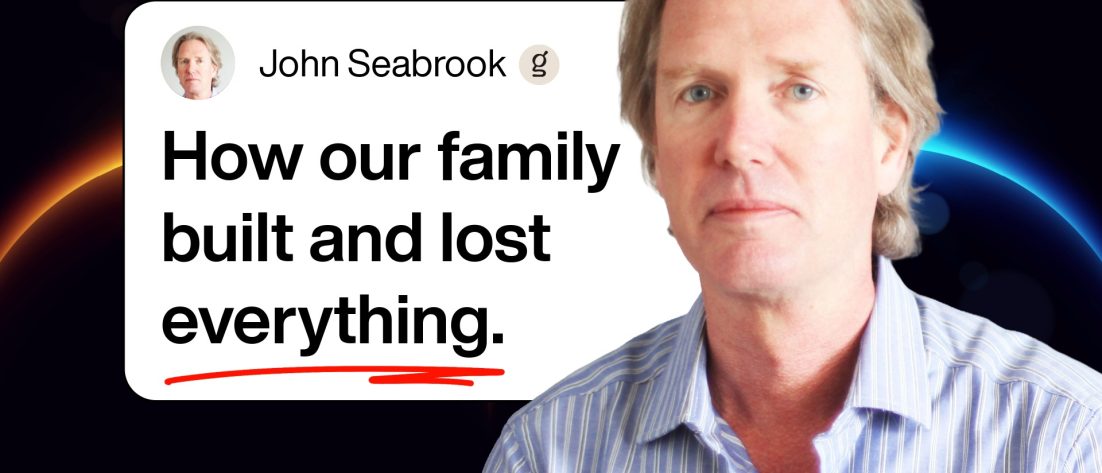
Have you ever wondered about the dark side of the American dream? In this episode, we delve into the complete Seabrook Farms history, a story of ambition, innovation, and betrayal that built—and ultimately destroyed—one of America’s largest agricultural empires. Author John Seabrook, grandson of the company’s visionary founder, joins us to discuss his book, The Spinach King, and unearth the secrets buried beneath a dynasty built on frozen vegetables. We explore the complex question of how a family can create a national brand from nothing, only to have it torn apart by the very man who built it.
From its humble beginnings as a small truck farm in southern New Jersey, Seabrook Farms grew into a powerhouse that froze one-third of the nation’s vegetables. John Seabrook recounts the story of his great-grandfather, a skilled farmer, and his grandfather, C.F. Seabrook, a Fordist industrialist who brought mass production to agriculture. C.F. Seabrook partnered with the legendary Clarence Birdseye to pioneer the flash-freezing process for vegetables, introducing staples like the lima bean to the East Coast. But this success came at a cost. We uncover the shocking story of CF Seabrook erasing his father from history, fabricating a more “illustrious” ancestry to bolster the family brand while cheating his own father out of the company he helped build.
The episode examines the complex labor practices that defined the company. We discuss the controversial story of the Seabrook Farms Japanese-American workers, who were recruited from internment camps during World War II under Executive Order 9066, as well as Estonian workers from displaced persons camps after the war. While the company created a unique, multicultural community in Seabrook, New Jersey, this benevolent image is contrasted with a much darker chapter: the violent 1934 Seabrook Farms labor strike. John Seabrook reveals how this event, involving armed vigilantes and the KKK, was systematically erased from the official company narrative. The full Seabrook Farms history is a complex tale of both progress and oppression, culminating in a family war that led to the company’s collapse in 1959. This interview, inspired by the book John Seabrook The Spinach King, exposes the human drama behind the iconic brand, from a cameo in Stanley Kubrick’s 2001: A Space Odyssey to the family’s strange friendship with a gangster bodyguard and the fairytale meeting of John’s parents at Grace Kelly’s royal wedding.
Introduction
Blaine DeSantis: Welcome to Books and Looks, where we do a deep dive with authors to help you discover your next great read. Have you ever wondered about the dark side of the American dream, the secrets buried beneath layers of success, or how frozen vegetables connect to national scandals and family betrayals? You’re in for a real treat today on Books and Looks. We often see the shiny facade of successful families and businesses, but there’s almost always a complex and often difficult story underneath. Unearthing these stories will help us understand not just history, but also the enduring themes of ambition, power, and family dynamics.
Today, our guest is John Seabrook, who is the son and grandson of the men who built and lost one of America’s most significant agricultural empires, Seabrook Farms. John has written an absolutely fascinating book about his family and their agricultural dynasty. A true rags-to-riches story until things went very, very wrong. I’m Blaine DeSantis. This is Books and Looks. And today we’re talking with John Seabrook about his new book, The Spinach King: The Rise and Fall of an American Dynasty. John Seabrook, welcome to Books and Looks.
John Seabrook: Thanks, Blaine. Good to be here.
Blaine DeSantis: Very happy to have you on and I thought, extremely brave of you to write this book about your family, exposing all the good points, the bad points, and the ups and the downs. Very, very fine effort on your behalf. Very fine.
John Seabrook: Thanks so much.
The Rise of a Frozen Vegetable Empire and the History of Seabrook Farms
Blaine DeSantis: And your family doesn’t go back that far because I think it began in America. It was your great-grandfather was the first person who came over here. And it’s a rags to riches story, truly rags to riches story, and yet, great-grandfather is basically eliminated from history. Why did your grandfather do that to his father?
John Seabrook: So my great-grandfather, who is named Arthur P. Seabrook, came over to the U.S. from London with his father and mother in 1859. And they were just displaced, working-class people looking for a better opportunity.
They found their way down to southern New Jersey, the very southern part of New Jersey, which a lot of people don’t even know exists and there’s really very little reason to go there. It’s that peninsula, not the Cape May side but the other side. They found their way down there. It’s always been a great farming area. In the 19th century, a lot of the vegetables that went to Philadelphia and New York came from New Jersey. They were called truck farmers, and that wasn’t because they used trucks, it’s because the word truck was used for produce. It was like, I have no truck with you, which would be a way of using that word.
And so my great-grandfather learned the truck farming business as an apprentice starting at the age of 15. He eventually made enough money to buy his own land in the 1880s, and then he and his son, my grandfather Charles, went into the farming business together in 1905. But my grandfather never liked farming. He never liked the whole hard work and outdoor part of farming. He liked making money and business and building is what he wanted to do.
He originally thought he would just leave the farm as soon as possible. But because they lived in that first decade of the 20th century when farms were mechanizing, he realized that instead of leaving the farm for industry, he could bring industry to the farm. His inspiration was Henry Ford, who was about 20 years older than him. His vision was to build a Fordist vegetable factory in southern New Jersey and to use those mass production methods and apply them to vegetables, both the growing of vegetables and then the processing of vegetables. And so that’s basically, he found some investors in New York.
They backed him. He bought his father’s share of the land for much less than the land was worth. So he cheated his father out of it. And that is important later on. And then he did, he built this vegetable factory in the 19-teens. During the First World War, it went very well because the price of food went through the roof. But after the war, the food prices collapsed and he eventually went bankrupt. And that was the first iteration of Seabrook Farms.
But he came back the second time and for good with frozen vegetables. He knew Clarence Birdseye. Clarence Birdseye was an inventor who invented the flash freezing process. He was inspired by seeing fish caught above the Arctic Circle freeze in midair. And then when warmed up months later, it tasted just as good as if they’d just been caught. And he thought, if I could reproduce that in the laboratory, I could patent it, and that would be a food revolution. And he did, and he did it for fish and poultry, but vegetables eluded him. Vegetables were a little harder to figure out. You have to cook them a little bit first.
And my grandfather and he worked on it together. At this point, my grandfather had his three sons, the youngest of which was my father, and they worked out this process. And so they became the frozen vegetable packers for Birds Eye and really pioneers in the whole industry of frozen food. And then after the Second World War, they started their own brand, Seabrook Farms. And that became, by their peak in the 50s, so you talk about rags to riches. They went from, he went from a sharecropper—my great-grandfather was a sharecropper who eventually had a 50-acre farm to, by 1955, my grandfather and his sons had 25,000 acres and another 25,000 acres under contract. They had 8,000 employees.
There was a whole village called Seabrook, which is still there, created for the workers. They froze a third of the nation’s frozen vegetables. They basically introduced the lima bean to the East Coast, which the lima bean turned out to be a great vegetable to freeze.
They brought people from all around the world, really, to southern New Jersey as workers who ended up settling there, including Japanese-Americans from internment camps during World War II, Estonians from displaced persons camps after the war, African-Americans from the Jim Crow South. Seabrook, New Jersey, even though it’s in the middle of really nowhere, became a nexus, a crossroads for many different cultures because the nature of farm work is such that Americans didn’t really want to do it. And so they had to find people from other places to do it and that’s certainly still true as we know. And so it became, that’s the riches.
Erasing a Patriarch: How C.F. Seabrook Rewrote His Family’s History
Blaine DeSantis: It got that big, it certainly was. But now your great-grandfather comes from England, but there’s another branch of the Seabrooks also from England that your grandfather wanted to be associated with. Why? And that’s I guess he eliminated your great-grandfather from his history. Tell us about that.
John Seabrook: My grandfather was a man who wasn’t educated beyond eighth grade, but who achieved great success and rose very quickly from being working class to upper class, skipped the middle class pretty much altogether. And he felt that he needed more illustrious ancestors. I think like a lot of Americans who find themselves very rich or successful, all of a sudden, it’s hard for them to figure out who they are, what their identity is. And for my grandfather, he felt like in order to make sense of his life, his success, he needed to have more illustrious ancestors than he had.
And so he basically, there was another branch of Seabrooks who came to America much earlier than us, who settled in South Carolina. As anyone in South Carolina knows, there’s a Seabrook Island just off of the coast of South Carolina, the Edisto Island. That’s where they settled. They had a big plantation and lots of slaves. And that was the family my grandfather wanted to belong to. But in order for that to happen, he first of all had to hire a genealogist to prove it or make it up or link us. And then he had to get rid of his actual ancestors.
So, when the brand started, and the thing about the Seabrook brand was that it was unlike Birds Eye or Green Giant, which was another frozen food power, it was based on a real family, my family. And the family was used as a promotional strategy to sell the product. And so when they came to write the brand story, the story of the Seabrook family, my father and his brothers were startled to discover that their father wanted to completely eliminate his father from the brand story, the brand history, the history of the company.
And then to make CF into a self-made man, but really his father was the one who really mastered the art of growing vegetables. CF mastered a lot of other things, logistics, building, finance, but the actual art of growing vegetables was what his father did very well and taught CF. And also irrigation, which the Seabrooks introduced a lot of different innovations over the decades of the 20th century. But the first one in the first decade, in 1906 or so, was irrigation. South Jersey had no irrigation. The farmers who grew there had to depend on the weather. And if it didn’t rain, they were screwed. And because if you didn’t have pumps and if the ground was completely flat, you couldn’t move water anywhere with any kind of effectiveness and economic reality. But so the Seabrooks brought pumps to that area for the first time and created an irrigation system that then spread to the other farms. And that was CF’s father’s idea. So he erased his father from company history and replaced him with this illustrious family that went back to the 17th century.
Blaine DeSantis: Who didn’t know the other side of the family over in England, if I’m not mistaken.
John Seabrook: I discovered that we had all these cousins over there when I started researching this book. Because by then you had the internet and I was able to find on Facebook, I think, a Colin Seabrook who lives in Essex, which is where I knew my family came from. And I met him over there and he had a whole family tree going back into the mid 18th century of Seabrooks. And then he had a question mark for my great-grandfather. What happened to him? So I was like, well, I can tell you what happened to him. It’s my family.
Blaine DeSantis: Wow. That’s amazing. That’s really great. So I got a little bit of genealogy as you were finding this out. And that’s something that can be a lot of fun.
John Seabrook: It’s great. It’s a fun thing to do.
Blaine DeSantis: It can be, yes. Especially when it pops up to wrong people.
John Seabrook: It usually does one way or another.
A Controversial Workforce: Japanese-American Labor During WWII
Blaine DeSantis: I know. Didn’t that show on PBS or something like that about a gentleman has that? Anyway, this whole book, which is, by the way, friends, this is a fantastic book. I can’t tell it. I’m loving this book. This book grew out of a speech that you had to write for your grandfather?
John Seabrook: My dad was writing it for my grandfather.
Blaine DeSantis: You were writing it for your dad.
John Seabrook: He helped me. So the little background of that is, one of the worker groups and one of the most devoted worker groups that came to Seabrook during those years was the Japanese Americans who came from, as a lot of folks know, in 1942, after Pearl Harbor, FDR issued Executive Order 9066, which basically allowed the government to round up American citizens who happened to be of Japanese-American descent in the West Coast area and place them in internment camps all around the country.
And then as soon as they had done that, I think they realized how horrific an act, this violation of civil liberties this was. And so they wanted to move those workers to farms and industries around America, but off the West Coast. And Seabrook Farms was one of the places that workers ended up going. Seabrook recruited from the camps. Some of the workers who came to Seabrook went back and recruited from the camps. Eventually, 2,000 of those workers and their families came during the war years, settled at Seabrook, worked in the plant. A lot of them went back to California, but some of them stayed. And they started at a museum, which is there still and open still, which was devoted to the history of the company and my grandfather and their experience in coming to Seabrook during these very traumatic years in their lives.
And so my father was asked to speak at the opening of that museum in 1994. And at a reunion, at the same time, a reunion of a lot of the workers and their families. At this point, their children are adults. And he asked me to, well, I was struck by the fact my father was a very gifted man in many ways. And one of the ways was public speaking. He was very glib and he never seemed to have any fear of public speaking or blocks in terms of the flow of words. But in this particular occasion, the subject was, what were the qualities of your father that allowed him to create this enterprise, Seabrook Farms? And he seemed to really be struggling with it.
And I was interested in that. And he then asked me to help him. This is when I had started my career. I’ve been a staff writer at the New Yorker for almost 30 years now. But that was at the very beginning. And so I was happy to try to help him. And I realized as I was working with him and looking at the materials that there was a lot more to this story of my grandfather as this benevolent humanitarian capitalist that the story that’s told in the museum than we knew, that there was a darker side to it and that he knew what it was and he had experienced it, but for some reason he couldn’t talk about it and it really had blocked him from being able to write this speech.
And that was really the beginning of this project in a way, because I had grown up with this idea of my family’s history in Seabrook Farms as being one of great innovators and engineers. And they were in many ways. We can talk about some of those ways. But the fact is that the whole business fell apart in 1959. It was sold. My father and his brothers were disowned. There was some huge explosion that had happened between my father and his father. And it resulted in the end of the company and what had happened. And he wasn’t saying, he never said what happened. The only thing in the speech that he said that came close was that it was striking that my grandfather had such a close relationship with his workers and such a distant and cold relationship with his family. But he didn’t go too much further than that. And my project really became to figure out what really happened between them.
Blaine DeSantis: And friends, I’ve done a lot of reading, as many of our listeners have, of what went on in the internment camps out west. I never knew, John, that they had been basically leased out, farmed out to other produce companies. That was news to me when I read that. So did they contact your dad or how did your grandfather get around to getting these people here?
John Seabrook: That’s a good question, Blaine. In my father and grandfather’s case, it was the American Society of Friends, the Quaker organization, specifically their Philadelphia branch. The Quaker Society of Friends had been one of the very most prominent civil rights groups that protested the internment of Japanese Americans from the very beginning.
You have to remember, this was right after Pearl Harbor. There was this hysteria. And the reason for it was that a lot of people feared that Japanese Americans, because of their ethnic origin would be more inclined to side with the enemy and that they had to be taken away from the West Coast to protect our country, which was absolutely racist, completely. And in fact, these folks were some of the most patriotic people around. And for them, coming to Seabrook, even though in terms of living conditions, it really wasn’t much of an upgrade, the same kind of barracks type. Plus, they now have to work, which in the interim accounts they didn’t. And they’re paying rent now because my grandfather not only owned the company, he also owned all the housing. And he was their landlord. He had absolute control.
And so even in spite of those things, they wanted to be at Seabrook because they could prove their patriotism. Food was very much connected to the war effort. Everything Seabrook grew during the war years was sold to the government. The government asked Seabrook to plant beets and rutabagas because they could be dehydrated and put into meals ready to eat for soldiers in any climate. And they had a lot of iron in them and other nutrients. And everything they grew, the quartermaster bought. And the Japanese workers were producing that food. So it made them feel a lot less ashamed, I think, than they had in these camps. And they saw my grandfather as being a person who had allowed them that opportunity. And they really more than respected him for it, really venerated him for it.
And then the same with the after the war, there were a lot of people who came from the Baltics and other Eastern European countries that ended up in displaced persons camps. Also, a lot of the survivors of the Holocaust ended up there, too. And for some years, no one really knew what to do with them. Who wanted them? In the case of the Baltics, the Estonians, they couldn’t go back to their homeland because the Soviet Union had taken it over and they were hostile to them. So my grandfather sponsored 700 to 900 of them, and they came to Seabrook. And became American citizens and found a pathway to America and whatever success they could find.
And they very much venerate my grandfather too. So that was in writing the story. It wasn’t just I was taking a story that had never been written and telling the story. I was taking a story that an official version of which, like a company PR version of which had been written and even enshrined in a museum. And I was presenting an alternate version of that narrative, which kind of undercut that narrative and that man in significant ways. That was one of the big challenges of this project.
The 1934 Strike: Labor, Race, and the KKK in South Jersey
Blaine DeSantis: Absolutely. And people don’t realize, you mentioned the Estonians. When the war started, they were basically under domination of the Germans. Then here came the Russians in. Then here come the Russians in. They’re there a year. Then the Germans come back in again. And it goes back and forth, swinging back and forth. And it’s a fascinating history of the Estonians during World War II. But a bunch of them ended up here in America. That’s really something. Well, let’s go to a dark…and I don’t want to sit there and tell a long, long, long about this. But it’s a dark area. 1934. You had the strikes. You’ve got the race riots. You’ve got the KKK. You got armed vigilantes. Tell us about what happened there, John.
John Seabrook: So we haven’t talked a lot about labor, but a significant… So my grandfather really sold Seabrook to investors as a mechanized, Fordist, modern operation. But in fact, mechanization couldn’t really cover all aspects of the vegetable growing and production line. When it came to grains and corn and wheat, you could mechanize that whole operation and do it all with a couple of machines. But when it came to picking and cultivating vegetables, there were still steps in the operation that needed people.
And so, even as a company continued to mechanize, the labor force continued to grow. And even when you could get big machines like viners that could hoover up a whole row of beans and vines and all, then you have to have people on the other end of the line sorting everything in the plant. So labor was always an issue. In the early 20th century, there was a lot of Italian, Southern Italian immigration, Eastern European immigration, and my grandfather benefited from those workers. But that’s right up in the 20s when there was this nativist backlash to immigration, not unlike the one we’re getting today.
And those workers were replaced by African-Americans who were coming in part of the Great Migration coming out of the South. And they worked at Seabrook Farms in the 30s as the company was beginning to get into frozen vegetables. But the black workers were never treated fairly. The white workers always, even though the black workers had seniority, they would always be the first to be let go during the slack season when they didn’t need as many workers and then rehired when they did. So eventually they decided to form a union and call a strike. And they did in July of 1934. And that was a very courageous act, not only because South Jersey was a Jim Crow de facto place in those days and after for many years, but also because my grandfather was a man of total control who never had been challenged by anybody, his sons or anybody.
And so to have black workers challenge his authority was particularly galling. And he brought in these armed vigilantes, minimum small-time farmers, Italian, the sons of the original workers in some cases. The KKK in the East Coast had a resurgence in the 20s and 30s, part of that nativist backlash against immigration. And there was a chapter in South Jersey that offered their help. They weren’t actually involved in the violence, but they were hovering in the background. And they burned crosses on the lawns of some of the officers of this union.
And eventually, FDR, the Secretary of Labor, sent a negotiator to settle the strike. And an agreement was hammered out in which those black workers would be rehired at a higher wage and promised not to be let go during the slack season, et cetera. But basically, as soon as the negotiators left, my grandfather went back on it and fired them all. And really, some black workers continued to work at the company, but that was the beginning of the turns of the Japanese-Americans and then the Estonian workers. And the history of the strike and the history of the black workforce was really erased from company history, never featured in that early iteration of the museum.
And I didn’t even know about the story of the strike until I started researching Seabrook Farms. After my father’s speech, I decided to look further into it. And that was one of the very first things that I discovered was that there had been this strike at Seabrook and my family had been involved. And my father’s oldest brother, Belford, was described as throwing a tear gas bomb into a woman’s house with children. And my other uncle, Courtney, was the middle brother, was arrested for running over one of the strikers with a truck. And these men were nice, gentle men. My father’s older brothers always very sweet. This was pretty shocking stuff. And when you’re a writer who’s writing about your family and then you discover these things that your family has done that are very unpleasant, it does pose a very difficult dilemma for you, which is whether it’s better to protect your family or whether as a writer, this is good material.
From the Farm to Outer Space: Seabrook’s Cameo in 2001: A Space Odyssey
Blaine DeSantis: That’s why I said you’re a brave man to do this. A lot of people wouldn’t do that because there’s some bad parts in all families, and you got to write about that. Hey, one of the things I want to talk to you about, there’s so much to talk about, John. 2001: A Space Odyssey. There is Seabrook Farms frozen spinach in this classic American movie. How did that come all about?
John Seabrook: So if you watch 2001 and you have your clicker ready, when it gets to the scene where the astronauts, they find this thing on the moon, the tablet thing has shown up, and they’re bringing a couple of people over from Earth. And there’s a scene of transiting and they have a meal in the space station, and they’re seen squeezing this stuff into these straws and then sucking on it. And if you look at the packaging, the Seabrook Farm’s logo is right at the bottom and it’s liquefied vegetables, liquefied carrots. And so the question is, did they get permission? And yes, they did.
It was licensed, I guess. At that point, the company had been sold to another firm. That was after the ’59 split. And so I didn’t see the records of what those negotiations were like. But I do know that the brand was definitely behind that and saw that as a favorable marketing opportunity. I don’t think that’s the way Kubrick meant it. I think the film makes it horrifying to have to eat this stuff.
And it is kind of funny because it really is not inconsistent with the way frozen food was marketed. In the 50s when Seabrook really was innovating and Seabrook was one of the first to introduce the boil-in-a-bag pouch, which the Kubrick thing was a play on, and that was actually a big innovation because that allows you to prepare recipes, not just frizzed spinach, but cream spinach. You could add butter and cream and even whole entrees you could put in the bag before you froze them. And that was just a very modern space-age kind of a thing. And that’s how they sold the product. And the advertising was all Jetsons, sort of like the modern couple, dressed to go out to the opera. And the kitchen is super modern and clean, and it’s very sterile and I think that’s what Kubrick was satirizing really in 2001.
An Unlikely Friendship: John Seabrook’s Father and Red Saunders the Gangster
Blaine DeSantis: Pretty neat, that’s pretty neat there. There is so much, so much we can get into here. I mean, all your family’s innovations. One of the things, you grew up with a known gangster in the house as a bodyguard, Red Saunders. Tell us what that was all about.
John Seabrook: It was my dad, really. So after the strike, we’re actually leading up to the strike. So we’re talking the 1930s, the American Communist Party was quite an active entity. Communism, a lot of liberals in the late 20s and early 30s had embraced the Communist Party. We didn’t really know that much. Stalin’s programs were just starting, the information was slow getting out. And a lot of liberals were very infatuated with communism and labor unions. And the whole union movement was deeply entwined with the American Communist Party, which later became the subject of the McCarthy hearings.
So in the early mid-30s, some of the people who came down to Seabrook to support the Black workers and then to organize them were affiliated with the American Communist Party. And some of them were arsonists. They made their own wooden baskets down there. The storehouse where they held those was set on fire one night and other houses were burned. There were threats of violence. My grandfather, who at this point was living with my grandmother and my father, who was at that 16, 17 years old, in their big house in the middle of the fields of South Jersey, which is a fairly isolated place, decided they needed a bodyguard in the house.
And they hired this guy from Atlantic City named Red Saunders, who Prohibition had just ended in 1933, and Red Saunders had been a bootlegger, and he was out of work. And a lot of those bootleggers, some of them, the gangster elements ended up being strike breakers. And that’s how he was making a living at that point, was as a strike breaker, as an enforcer who you could bring in and beat the workers up. And maybe that’s how my grandfather heard about it. My grandfather had various dealings in Atlantic City. Atlantic City was not that far from Seabrook. And the legend is that during Prohibition, he would make apple brandy from his apple crop and take it to Atlantic City and sell it. But I’m not sure if that’s really true.
At any rate, he needed protection. He hired this guy, Red Saunders, and he moved into the house. My father and he became… my father was really always looking for a father figure because even though he had this immensely powerful, magnificent father, he never really got to spend much time with him. He was never around a lot. He was always insanely busy, and often away. And that’s one of the poignant things about my dad’s life is that he was always searching for an older man who could be closer to him. And so Red Saunders became one of those men. It was an unlikely pairing. They didn’t really have a lot in common. But Red Saunders and he wrote letters to each other when he went away to this one-year boarding school and then to Princeton. And he kept those letters along with a lot of his other things that he left for me. And so I got to have an intimate look at my father’s relationship with the in-house gangster.
A Royal Wedding: How Grace Kelly United John Seabrook’s Parents
Blaine DeSantis: My word. Well, I got to move forward to your dad. Your dad was accompanying Grace Kelly and part of her entourage when she went to Monaco to marry Prince Rainier. How’d that come about?
John Seabrook: So my dad was married when he was very young to a woman who was even younger. They eloped, actually. And it was not a match made to last. We had two children, my half sisters. And then he got divorced. And then in the 50s, he was a swinging bachelor. He was a very impressive looking guy. He was tall and handsome. And he was absolutely beautifully dressed.
I write about his clothes in the book quite a bit. He had such an extensive closet that he actually had a mechanical, like a dry cleaners apparatus installed in the attic of the house that then came down behind the walls. And so that when you stood in front of his dressing room closet, it was like a normal closet. But then there was this keypad and a code with the numbers that corresponded to different kinds of clothes. And you’d push that in and the whole thing would move around. He was incredible.
At any rate, he was a very attractive young guy in the 30s, and he dated a lot of movie stars, including Eva Gabor, who was the sister of Zsa Zsa. And like I say in the book, they were the Kardashians before the Kardashians, the three Gabor sisters. And she would come to the farm. In fact, a lot of people who probably know Eva Gabor through Green Acres may be surprised to learn that the role she played in Green Acres, which was that of a sophisticated city cosmopolitan who comes down to live on a farm, she lived 10 years before that role when she dated my dad and would come down to Seabrook Farms.
The Kellys were also part of his social orbit because Grace Kelly’s father, Jack Kelly, was a builder in Philadelphia. Like my family, the Kellys started out working class. They were immigrant transgressors. Bricklayers. Famously, Jack Kelly, as a young man, was not allowed to row in the Henley Royal Regatta in England because he was a so-called bricklayer and the rules forbid having tradesmen because the young aristocrats, it wasn’t fair. In 1918, he won the Olympics, he won the gold medal and sent his cap to the king and said, “from a bricklayer.” And that made him a national hero.
Anyway, his company built the Seabrook power plant, this very impressive brick smokestack that rose 200 feet in the air with the word Seabrook on it, was built by Jack Kelly. So the Kelly and the Seabrooks knew each other, and Grace and my dad knew each other, but she was quite a bit younger. And when Grace Kelly decided to get married, she invited my dad not only to the wedding, but to ride across the ocean on this ocean liner that the Kelly family chartered, the whole thing, the SS Constitution, to take the wedding party and the press from New York to Monte Carlo for the wedding.
Meanwhile, my mother, who my father has yet to meet, is a reporter. And she started out in South Dakota, Spearfish, South Dakota, a small town. Her grandfather had been a pioneer, homesteaded that place in the 1870s. And she went to Missouri journalism school during the war years. And then she got these opportunities that were available to women during the war years when the men were away to work. And she started out in Kansas City, transferred to Washington, and then she was quickly moved to New York where her talent was apparent. And she became she worked for the United Press and became a columnist in the early mid 50s, writing about it was called Women’s World. There were a lot of movie stars, but not just that. Social movers and shakers, different kinds of women. And she had broken the news of Grace Kelly’s engagement in her column. And that was a big scoop. And Grace had maybe given it to her because they knew each other and they were both Irish Catholic girls living in New York.
Anyway, so my mother got invited along on the ship, sailing from New York with the Kelly family as a member of the press. And there were a lot of press on that ship. The Kellys were very interested in publicity. And my father and my mother met on the ship. There were cocktail parties and stuff. There are these wonderful pictures, which some of them are in the book, of my mother on the ship with the reporters and Grace Kelly. And then when they got to Monte Carlo, the Rainier family were not into publicity because they were the royals. They didn’t believe in talking to reporters. Kellys loved publicity. And so there were no scheduled events for the press. And there were all these reporters there because it was the story of the year, really.
But my father heard this one great story. At that time, the year before, the movie To Catch a Thief was in movie theaters. That’s the Cary Grant and Grace Kelly movie in which Cary Grant plays a cat burglar in the south of France. And it turns out there was a real-life cat burglar at the wedding and one of the guests from Philadelphia’s jewels had been stolen. And the palace wanted to keep it all hushed up. But my father heard about it, took my mother out to lunch and said, if you don’t tell anyone they’re interviewing the woman right now, you can go and get an exclusive. And she was like, oh, I won’t tell anyone. And she came with him and she got this exclusive story, which you can imagine was it was really the story of the wedding. And it was sensational.
And that, I think, gave my father a leg up with my mother. And they were married five months after the Kelly Rainier wedding, and it was always linked. And that story and how they met, because they met really because of Grace and Grace Kelly’s marrying the prince and all of that, that great American story fairy tale was entwined with my parents’ fairy tale. And those are the kind of stories that made me a writer, I think, because my father was a great storyteller. He would tell that story. And I heard it a number of times. He would tell it to different people who came to the house. And he always had a great way of telling a story. And even though I do what my mother does, at journalism, I think partly the reason I do it is because my mother stopped doing it when she met my dad. And I always feel like she maybe certainly regretted that. And I think I fulfilled some of her unfulfilled ambitions. I don’t know how that works, but I think that works in families. And so I value my mother’s actual career and her perspective on my family, but it was my father’s storytelling I think that really made me the kind of journalist I am, which is a very narrative driven New Yorker, storytelling journalist.
The Art of Four-in-Hand Coaching: A Father’s Peculiar Passion
Blaine DeSantis: Well, one story we got to talk about and we, again, I have a lot more I can ask, but your dad was a, I think that four in hand coachman. Is that the terminology? Tell us about your dad, coaches, and carriages, and what’s that all about?
John Seabrook: Blaine, man, I’ve been trying to explain this my whole life. Let me tell you. When I say the word coaching, most people don’t think of four in hand, four horses in one hand with a tarphead. They think of the football field standing on the sidelines. But that’s not the kind of coaching my dad did. He never coached me in that way. He didn’t play sports or care about sports. The only kind of recreational activity outside of work, which was four-in-hand driving.
And so that is, if you look at Dickens, if you read Dickens or look at photographs or paintings, 19th century, you see the big carriage and the four horses and the people sitting on top, and then inside, there’s room for more. And those were really the buses of the 18th century, 19th century. In fact, if you go to England, they still call their buses coaches for that reason. And so my father started collecting those things. And the prize of his collection was this coach called the Nimrod, which had made a run between London and Oxford in late 19th century. And Nimrod was in the Bible. In Genesis, Nimrod shows up and he’s a mighty hunter who became mighty in the earth, is how he’s…
For reasons that always eluded me until I finally realized it was really his father that was the explanation. My father formed this kind of bond with Nimrod and had all the license plates in his vehicles changed to Nimrod 1, 2, and 3. He had the name of the road changed to Nimrod Road. But unfortunately, while he was doing this, the word Nimrod was no longer a mighty hunter. He was more like a mighty doofus. And the reason for that was Bugs Bunny had called Elmer Fudd Nimrod in the cartoons because Nimrod was such a terrible hunter. As you remember, he couldn’t see and he never got Bugs Bunny. So he was mocking him by calling him Nimrod. And I think it was Gen X picked up on that and made it. So if you went for a ride in one of the Nimrod cars by the 80s, you got a lot of honking and flashing lights from a lot of hysterical people that my father completely ignored.
At any rate, so he had this four-in-hand coaching set up, and it required, first of all, a huge amount of mastery. That was one thing that I’ll give him his props for doing this. The physical act of driving four horses with eight different reins all looped around different fingers, and four powerful horses with 12 people sitting up, about 15 feet above the ground, if you don’t know what you’re doing, you can get really seriously hurt. And so there was that part of it. But then there was all the right harness, the right presentation, the right horses. And as he went on, and a lot of this happened after he was disowned by his father. As he went on, he became increasingly elaborate, increasingly royal, really. The only other people that really do this at that scale are royal people who have the palace to pay for it.
Where was the money coming from? How did he make that money? That becomes part of the book. And that was another dark part of the story. But I grew up. That was what we did as a family. We went out on the coach. And there were times when it was fun. We would go for a picnic in the woods and we would take one of the lesser showy coaches and tie the horses up by the trees and cook out. And that was a lot of fun. Also a lot of drinking later on, on those excursions. But the ostentatious display, which was important to my dad, I always recoiled from it. I was embarrassed when we went along these little country roads with my dad in his top hat, and people would pull their cars over and take pictures as though we were Princess Diana and Prince Charles or something. I hated that stuff. I never wanted that kind of exposure.
The Fall of a Dynasty: Who Owns Seabrook Farms Today?
Blaine DeSantis: It is a fascinating life. Like I said before we even started this interview, I could talk for hours with you because you are fascinating, the story is. We only got around half of the questions we’re going to talk about, but you’re gonna have to read it friends in the book, because this is one great book, and these are just some of the stories that you’re going to find in this book, and this history of the family, truly a rags-to-riches story, back to rags, and the business has been sold. By the way, did any of the families still own any part of the business?
John Seabrook: Yeah, so what happened was, so there was this whole blow up after my grandfather—my grandfather died in 1964. And as I said, his will cut his sons out. He left a lot of his money to the only daughter because what happened to precipitate that was, he got crazier in the 50s. He started doing a lot of irrational stuff. The bankers on the board of directors basically said, this guy’s nuts. You got to get rid of him or we’re going to call our loans and the company will be bankrupt. And so the sons decided that the only way they could remove him was to have him declared incompetent and to basically have him confined.
And they tried to do that, but their sister didn’t support it, and it failed. And their father found out about it, and he disowned them, changed his will. But after he died, they tried to have the will thrown out. He did a bunch of interviews with people. My father kept all that material and left it for me after he died. And that was the first time I really knew exactly how my father had been treated by his father. And it seemed like he was using me as an instrument of revenge, really, to get back at his father after death. And I kind of struggled with whether I wanted to be the instrument of his revenge.
At any rate, so the land was eventually sold. My grandfather’s land was eventually sold. The government took over a lot of the housing, but my father’s oldest brother’s sons, so my father’s oldest brother was Belford, his sons started a new frozen food company, packing company in that area in the 80s. And they eventually bought back the brand, the Seabrook Farms brand, and they packed that brand. So the original company is gone, and the buildings are mostly gone except for that museum, which I encourage people who are in that area to visit.
But the new plant is working nearby. Now the next generation runs it, my cousins, and they pack the brand and they pack the frozen cream spinach is still popular in markets where it’s available. And it actually is really pretty good, I got to admit. And so there’s still a family component. I’m not sure they’re too pleased with me for writing this book because I think they prefer the official narrative of my grandfather, but hopefully we’ll reconcile that.
Blaine DeSantis: There you go. All right, well, I can’t take up any more of your time. We’ve gone on for almost an hour. My God. We can talk, having a great time with you, John. Very good. I want to just say on behalf of all of us here at Books and Looks, thank you, John Seabrook, for being with us today on Books and Looks.
John Seabrook: This has been really fun, Blaine. Thank you.
Blaine DeSantis: Well, once again, John, thank you for this truly fascinating look at your family at Seabrook Farms. Friends, history is all around us, and behind many successes, there lie layers of complexity, secrets, and human costs. Last year we had an episode on The Sugar King, and now we highlight The Spinach King. And the one constant in both books are the family struggles and quarrels that lead to the breakdown of the family as well as the loss of a family business. And so another episode of Books and Looks is now in the books. On behalf of our partners at BookTrib.com, this is Blaine DeSantis wishing you another week of happy reading. We’ll be back next week with another edition of Books and Looks.