

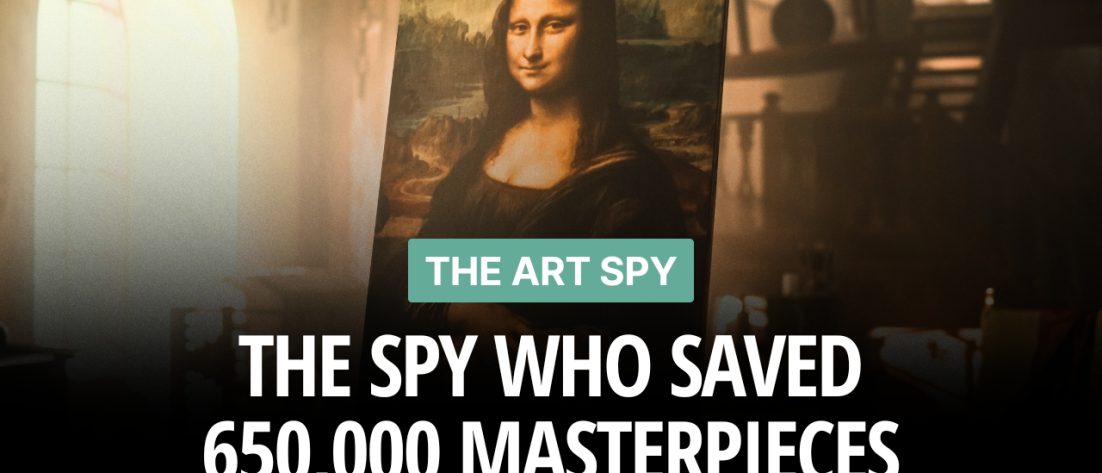
Meet Rose Valland, the art historian turned spy who documented the Nazi’s massive art theft operation from inside occupied Paris. In this riveting episode, author Michelle Young reveals how Valland secretly recorded details of over 650,000 stolen masterpieces using her near-photographic memory while facing a Nazi death warrant. Young shares previously unknown details about Valland’s dangerous double life, her relationship with her British partner Joyce Heer, and how her meticulous documentation became essential to the Monuments Men. This true story of extraordinary courage illuminates how one determined woman risked everything to preserve France’s cultural soul during history’s darkest hours.
Links:
Transcript
Blaine DeSantis: [0:00] Hi, everybody. This is Blaine DeSantis, and I welcome you to another edition of Books and Looks. Yes, it’s our weekly voice of discovery into the wonderful world of books. The best of history, mystery, fiction, and nonfiction that I’ve been reading, all brought to you here on Books and Looks, along with, that’s right, along with exclusive author interviews that you’re not going to find anywhere else, only here on Books and Looks.
Blaine DeSantis: [0:24] Let’s not forget our good friends over at BookTrib.com. My gosh, every time I look there there’s new book reviews up, new categories of books that are there, our shows there. It’s a wonderful category, it’s a wonderful place to be at. You don’t want to miss anything bookish, you go to BookTrib.com. Also don’t forget BooksAndLooksPodcast.com. That’s right, Books and Looks Podcast. Thank you for everybody who’s subscribing, who is liking us, everything else. We appreciate your support, we really do. And today, today I’m going to be talking with a young lady by the name of Michelle Young about her book, The Art Spy.
Blaine DeSantis: [1:01] The Art Spy. It takes place as a nonfiction book in Nazi-occupied Paris. One woman, I should say, is risking everything to save France’s artistic heritage from the Third Reich. She’s armed only with her wits, her courage, and her unshakable devotion to art. Her name was Rose Valland, and she worked undercover at one of the leading museums in France. Well, she was undercover. It’s not like she was in there. She worked there. Yeah, she worked in that museum, and the Germans never had any idea she was making duplicate copies of everything that she knew exactly where things were going so she could document the systematic looting of France’s and Europe’s greatest masterpieces. This is a true story, friends, and it illuminates an untold heroism by a woman who we never heard of before. Again, and Rose Valland. She fought to preserve the beauty and the culture of France in the darkest days of World War II. I’m Blaine DeSantis. This is Books and Looks, and today we’re interviewing Michelle Young about her new book, The Art Spy. Michelle Young, welcome to Books and Looks.
Michelle Young: [2:11] Thank you so much for having me.
Blaine DeSantis: [2:12] I’m so glad to have you here. And one major reason is that you still have your voice and that’s because beginning now when this comes out you’re on book tours. Kudos and…
Michelle Young: [2:28] I do have a tendency to lose my voice so fingers crossed.
Blaine DeSantis: [2:32] Okay, well this book The Art Spy is a wonderful, wonderful teaching lesson about what one person’s courage was. Her name was Rose Valland and you know, before we get into the book itself, tell us a little bit about this book tour, because I’ve never had anybody talk about their book tours. Most of my authors don’t have book tours, okay? But you have a huge book tour. Tell us about it. Who schedules this? Where are you going? Let me hear all about it.
Michelle Young: [3:04] Yeah. My publishers are extremely excited about this book tour. They’ve been saying that it harkens back to the golden age of books. So they have been super supportive and they planned out my initial two weeks of stops. So I’m going to seven or eight cities, you know, New York, DC, Boston, but also places like Cleveland and St. Louis, Columbus, Chicago. So very, very excited about that. But the tour continues, so I’m going to more places through June and into the fall, and some of those came about because people reached out to me, organizations and museums and such, and others, I may have reached out or had a connection. So collectively we are going to, you know, nearly 30, we, I mean me going to nearly 30 places so far. And I’m very excited about it. I love doing events.
Blaine DeSantis: [3:59] And you’re going to Europe as part of this, if I’m not mistaken.
Michelle Young: [4:03] Well, yes. So my husband is French. My kids are French and we go every summer. And there is a publication there that I’ve long followed and been friends with the founder, Messy Nessy. And she has a book club event. So I’ll be partaking in that.
Blaine DeSantis: [4:23] You know, we had a fantastic book interview with a lady who sat in a park bench in Paris last year. And it was during the middle of the Olympics. It was the best reception we ever had. She sat in the park bench for an hour and talked with us. So I don’t know. I think the French have great internets. I’m not sure, but you’ll be a wonderful success wherever you are.
Michelle Young: [4:42] Thank you. Yeah, their tech is pretty good.
Blaine DeSantis: [4:45] Yeah, yeah, it really is. Well, anyway, hey, tell us a little bit about Rose Valland and what your book’s all about.
Michelle Young: [4:52] Yeah, so Rose Valland was a Resistance spy, but also an art historian during World War II, who was in the museum that the Nazis had taken over to loot art throughout France. And so she really was the woman who helped take down the art looting operation of the Nazis and the precursor to the Monuments Men and gathered the intelligence for them.
Blaine DeSantis: [5:17] Okay. How did you find out about her? Was it through the Monuments Men, or did you know about her independently?
Michelle Young: [5:23] No, I discovered her through the book, Göring’s Man in Paris by Jonathan Petropolis. This is a book about Göring’s art dealer. And he happened to be an employee in the same museum that Rose worked for. He was German, part of the Nazi party, and he was sent there. And they were nemeses. She hated him. He hated her really through the end of his life. And every few chapters, this woman named Rose Valland would appear. And I’m someone that actually almost exclusively read books on female spies from World War II for maybe a decade. And so I was astounded that I hadn’t known about her and dug into it and realized that I thought her wartime life was likely even more exciting than kind of had been reported. And that aspect I really wanted to dig into.
Blaine DeSantis: [6:13] If you watch the Monuments Men, friends, out there, Rose Valland is in it. They portray her as a woman named Claire Simone. But that’s about all they got right about Claire Simone. Okay. But the book does have something about her. But that’s wonderful. That’s wonderful. You found out about her and you were able to incorporate this. And that’s just great. Wow. She was one courageous lady. I mean… Did you know that she was doing this and that she had the courage and resources it took to do this when you started this project? Or did your admiration grow as time went on?
Michelle Young: [6:51] It really did grow. I mean, I had a hunch that she hadn’t marketed herself post-war in a way that, you know, would have left her in the history annals. She was very much an academic, and even though she had published her memoir post-war, it was almost like an academic treatise, very dry, really wanting to prove how art looting happened and try to prevent it for the future. But I think some of the stuff that I was able to piece together, I realized that there was more cloak and dagger than people knew. The kind of prevailing idea was that she was this mousy art historian working in a museum, taking notes and like, you know, in the shadows. But she was quite proactive, you know, like, for example, stealing documents from waste paper baskets and negatives of photographs and having them printed at night and putting them back in, or following Nazis throughout Paris to figure out what they were doing and where they lived. And the risk that she took was very apparent and at the end of the war she actually had a death warrant against her and the Nazis wanted to execute her.
Blaine DeSantis: [8:06] Wow. Well, it’s very interesting. And I think you even point out that she had what some of us would call a photographic memory. She could remember, and that really helped her.
Michelle Young: [8:16] Well, yeah, because originally the agreement for the Nazis being able to use this museum, which is part of the French National Museum, was that Rose would be allowed to do what they called a duplicate inventory. So anything that came in, the Germans would document in their way, and she would document it. That quickly was thrown out the window. She was not allowed to do it. Actually one of the German men closed her notebook, you know, very brusquely and made it clear like she was not allowed to do that. And so in order to do her documentation, she had to use her memory. So she would see numbers and names and such, and then go home and then write it down. And so speaking to her family, they said she had a near photographic memory. And actually, my daughter has a near photographic memory. And so I had a kind of a personal experience of what it’s like when someone can remember something, even from years back, precisely what the color was or what something said. And that was very helpful for her. She needed this to be able to do this job.
Blaine DeSantis: [9:22] Wow. Closed it just like that. Aye, aye, aye. Yeah. They were not the nicest guys over there. I’ll tell you that people don’t realize how brutal they were. I mean, they always wanted to come off, oh, we’re so nice, but they really were not very nice. And boy, what they did to the French and to the artwork and to the Jewish community was not at all nice at all. Well, now, how did her documentation help us get this art back? And how is it still working in modern day art restitution?
Michelle Young: [9:56] Yeah. So the intelligence she had gathered, she had always hoped it would be used in some post-war setting, whether it was to get the artwork back or in a war tribunal against the perpetrators. So when the Allies come to Paris, liberate it, she has all this information and her bosses, one of them who worked in the Resistance, also knew, of course, that she had this. But she was very reluctant to give it up. She was worried that everything she gathered would be stuck on some desk somewhere in bureaucracy. And so James Rormer, who was a Monuments Man, spent quite a lot of time getting her trust. And so she eventually gives it to him and tells him, these are the places you need to go to in Germany.
Michelle Young: [10:43] This is where the art is stored. So she’s really the precursor to the work they did, and they could not have done their initial work without her knowledge. And she also knew all the players as well and shared that information. In the post-war setting, and then she herself actually goes and is a Monuments Woman. So she was commissioned by both the French Army and the U.S. Army. And she served as a captain in the U.S. Army. So I always found that super impressive. But then in today’s time, there’s still believed to be at least 100,000 works of art that have not been found yet and they periodically show up. You know, someone dies and it’s in their Swiss bank vault, etc., and then the art world and the art business world has to figure out what to do with these paintings because they were stolen and not returned to their rightful owners. And so a lot of research has to be done to figure out the chain of ownership and where these errors are. And the one place that they need to go to is to consult Rose Valland’s files in France, which helps prove that it was looted. And so she remains very relevant today.
Blaine DeSantis: [11:59] Wow. Remember that movie? Was it Helen Mirren was in it? The Woman in Gold. Woman in Gold.
Michelle Young: [12:07] Yeah.
Blaine DeSantis: [12:08] Yeah. Again, friends, if you haven’t had a chance, watch that too, because that’s another fascinating look at trying to get this artwork back to the families it belongs to. Yeah.
Michelle Young: [12:18] Very fascinating. And it’s much more difficult than I think anyone would expect. I’ve been following the case of a Pissarro painting that was looted in Germany, and the family is in the U.S. now, and they’ve been trying to get it back for 25 years from a museum in Spain that has refused to give it up. And so that case has gone up and down in the Supreme Court twice and is awaiting its latest judgment.
Blaine DeSantis: [12:42] Yeah. All those countries over there in Europe are very, very remiss to give up what they’ve got. I don’t care what it is. They’ve got it. We want it. And you just, you think you win one minute and the next minute you get a decision against you. So yeah, that’s really fascinating. That’s right. What made Rose even more fascinating is, you know, in the beginning you show that she is part of the group that’s trying to save all this artwork. Let’s get it out to the countryside, let’s get it to the castles and the villas and then she goes back into Paris. Now did she do that on her own or was she directed to go back to Paris?
Michelle Young: [13:21] Well, I think it’s a combination of both. So first you mentioned the monumental effort. This is like moving most of the art in the Louvre and other museums in Paris. So this is the Mona Lisa, the Victory of Samothrace, that sculpture, the Venus de Milo, moving them carefully to storage castles and other places in the Loire Valley. So Rose is part of this effort. And then that happens at the outbreak of war, September 1939. And then there’s a period called the Phony War or the Funny War, where nothing really happens in the western part of Europe. And the Germans don’t invade France until June 1940. And as they’re approaching the gates of Paris, Rose is instructed by her boss. He calls her at the museum at dawn. She’s likely sleeping there, which she had done many times, and says, you need to leave the museum immediately. And so she reluctantly goes. She had been campaigning to stay because she wanted to.
Michelle Young: [14:28] Quite a bit of artwork left. And he says, you need to leave. So she escapes while the Germans are bombing Paris by boat in a very treacherous escape. And she ends up eventually at Chambord and Valençay Castle in the Loire Valley. And we know because she was so reluctant to leave, she must have been clamoring to get back. And so pretty soon after, in July 1940, she returns, but she would have needed approval from her boss and an Ausweis issued by the Germans to go back to her museum and to go back to Paris.
Blaine DeSantis: [15:10] So back in she goes, into the breach. Now, she does not work at the Louvre. I can’t pronounce the name of the museum she worked at. Help me, what museum was she at?
Michelle Young: [15:19] It’s called the Jeu de Paume, and it means court tennis. So it was a building built by Napoleon III where they would play tennis inside, and that was later turned into a modern art museum, and it’s in the Tuileries Garden just down the road from the Louvre.
Blaine DeSantis: [15:38] Okay. Well, your talk about Rose, you know, she has many different personalities. Not personality, but identities. She’s a custodian of these things, a curator, a historian, a spy. She has a partner. Tell us, how could you blend all this? That was a very complicated story.
Michelle Young: [16:00] Yeah. So with every character, minor or major, I try to really get down to the psychology of this person and understand that and thereby understand the decisions that they make. Whether it’s a kind of an evil nemesis character or it’s a heroine like Rose, all of that is key to understanding how events unfolded. And so for Rose, someone who was very private, was very cerebral, didn’t express her opinions or emotions very much. It was really important to try to get all the facets of this woman’s life. And I had a hunch that if I could understand her relationship with her lifelong partner, Joyce Heer, it would unlock and unpack a more personal side to Rose that hadn’t been covered before.
Michelle Young: [16:55] And so I spent a lot of time digging into this aspect and trying to find out who Joyce was, put together her lifetime line. And one of the things I discovered along the way was that she had been arrested by the Germans and incarcerated in the east of France. And this happened just a few weeks after the Nazis took over Rose’s museum and she began spying. So we can imagine anyone, I think, can imagine the stress that would put anyone under and the fact that she survived and didn’t even mention this episode in any of her papers is, I think, speaks volumes into kind of the chutzpah of this woman and how she was able to keep her cover.
Blaine DeSantis: [17:44] It is utterly amazing and you know you had done most of your research in person. I’m assuming that you can’t find this stuff out on the internet.
Michelle Young: [17:55] No, not I mean nothing is really digitized. Some of it is but the majority is not and you just have to spend days and days and weeks, you know, months, years sifting through boxes of documents and then later trying to organize them. And, you know, it’s a mix of very kind of a scientific approach to going through these documents, but also serendipity. So some of, I think, the big discoveries were not kind of labeled in anything. It’s like you sifted through and then you realized what a document meant or etc. So, but I personally just love that detective work. It was very much like a detective case and I’m sort of relentless and persistent and so over time was able to put together all the elements to write the book.
Blaine DeSantis: [18:50] How many years did you have to research for this, Michelle?
Michelle Young: [18:52] Well, I usually write and research kind of concurrently so all in all it’s about three years of the active work. Yeah. So, yeah, let’s say three years, three to four years.
Blaine DeSantis: [19:09] Okay. Well, that’s a lot of time. That’s a lot of time and effort. And boy, I’ll tell you. So you spent a lot of time in France. Well, that’s a nice place to be.
Michelle Young: [19:16] I did. Yeah. So France, but there were archives really all over the place. So I went to a bunch of archives in the U.S., in New York and D.C. And then some of the places I couldn’t get to, they sent me the documents I needed. So there were archives in Germany, in Latvia, in the UK. Yeah, Latvia.
Blaine DeSantis: [19:38] What? How did she get to Latvia? What’s up?
Michelle Young: [19:41] There, I know. So she actually didn’t go to Latvia herself, I believe, but she was awarded, she was made, you know, some very high civilian honor. She was given from the country of Latvia. And you know, it’s one of those things where I was like really wanting to understand like literally what date did they give this to her? Because I was like, did she get it in Paris or did she go to Latvia in kind of the early wartime? And the Latvian National Archives actually sent me their information.
Blaine DeSantis: [20:15] That’s neat. That’s really great. Wow. It’s nice to see everybody cooperating, you know, to get that story out because it’s been buried, you know. And this is really interesting. That relationship with her and Joyce. She had to keep that quiet prior to the outbreak of war. But then during the war, she had continued with that relationship. Tell us a little bit about that.
Michelle Young: [20:35] Yeah. So important to note that in the 1930s and into the war, the Germans—homosexuality was illegal for men and not technically illegal for women, but they definitely would harass lesbian communities. And in France, Vichy also had codified homosexuality as an unnatural act. So it was definitely not accepted. And especially in like the high levels of the French civil service, which was dominated by very traditional members of society, she had to hide that from them. Otherwise, her career would have suffered. And so she had been hiding this relationship before the war. And then of course, during the war, when it would have been extremely dangerous for her to be in a relationship with a woman who was British, and was technically an enemy alien. So a lot of stress and pressure.
Blaine DeSantis: [21:40] Wow. Yeah. She worked for the U.S. Embassy, if I’m not mistaken, or it was the British Embassy.
Michelle Young: [21:46] No, the U.S. Embassy. So she is in the 1930s. She begins to work there first as part of the Commerce Attaché or working for the Commercial Attaché and then works in the formal embassy. And she is a secretary stenographer. And doing more than that, she’s making statistical reports and other things.
Blaine DeSantis: [22:13] Wow. Just so people get the full understanding, Michelle, give us an idea how many works of art, if we can, how many artifacts. Give us a number. Friends, until you hear the number, you won’t believe it.
Michelle Young: [22:29] Well, officially, they say it’s around 650,000 works of art were looted by the Germans during World War II. But if you think about it, that is the number of artworks that they documented having taken. And they were quite meticulous documenters. But they were only documenting kind of the most important pieces. But they were stealing and looting apartments and families’ collections wholesale. So that meant not only were your paintings and sculptures being taken, but your silverware, your furniture, and all of that kind of household stuff, even if it was important and could be vintage and historic or antique, not all of that was getting put into an inventory. And so we take, you have to take that 650,000 even with a grain of salt. It’s much more and they estimate that about 100,000 or so are still missing today.
Blaine DeSantis: [23:24] And it began with they were looting, I guess they were taking the things from the Jewish community to begin with. And then it even expanded. When and why did that happen?
Michelle Young: [23:37] So the Germans, even before the war, were very intent on seizing artwork and other things that they believed rightly belonged to them. So that might be things that they believed Napoleon had plundered or they had to give back in the Treaty of Versailles, which they considered an unfair treaty. And they had sent almost like emissary researchers secretly into France to research and document where everything was. And so they already had this like very extensive list of artwork they needed to find and they had made a list of the 15 most eminent art galleries in Paris, most of which are owned by Jewish citizens in France. And they went to liquidate those almost immediately. So in any country they occupied, art was one of the first things that they went after. And the reason they went after Jewish art collectors is that they immediately considered them non-citizens. And many of them had fled, rightly so, afraid of what was coming. And so they made this law that said anyone who has abandoned their property and their collection, that stuff can be seized. So it was sort of a convenient labeling that enabled them to seize the artwork.
Blaine DeSantis: [25:04] Wow. And then they go on from there. Then they get more and more and more.
Michelle Young: [25:08] Yeah. And one of the other ways they justified it was that they said they were not actually taking the artwork, that they were simply safeguarding it for a future peace treaty. So again, kind of a euphemistic order that concealed a little bit of their intentions. But when you look back in history, it’s very clear what they were doing. It was just a systematic looting.
Blaine DeSantis: [25:29] Right. As a lot of this, as we know, went to Hitler’s home. A lot of them went to Göring’s home. And there was even competition among Göring and Hitler as to who got the best pieces of art.
Michelle Young: [25:43] Yes. So, yeah, everybody was fighting for art. So, of course, Hitler kind of defined this culture of obsession and collection around art. So everyone wanted to follow suit. And Hitler and Göring were battling all the time. And Göring was actually much more rapacious and greedy than Hitler. But even amongst the lower level Germans and Nazis, initially in France the ambassador to France was doing all the looting with the support of von Ribbentrop and then there was a whole jockeying of power and the organization run by Alfred Rosenberg and tangentially Herman Göring seized power of the looting operations and for the rest of the war it fell under their jurisdiction which was very helpful for Göring.
Blaine DeSantis: [26:37] Wow. Wow. This is a wonderful, wonderful book. And one of the things I liked that you brought out here is the fact that this art, and it’s not just art, but they made the point, it’s national identity, and how this art just, you know, tell us how that is that the nation, now they were almost like made a plea, they’re taking all our national identity away from us, you know?
Michelle Young: [27:01] Yeah. So art, obviously, and culture, very strongly tied to French identity historically. So many of, you know, the kings of France were patrons of the arts, and we have some of the most famous museums in this country. And for Rose, who studied art history, was also an artist herself. She was trained at the École des Beaux-Arts in Paris and in Lyon. This concept of the beauty and the cultural inheritance of France was almost core to her. And I think this appreciation of art really lifted her from her early childhood as the daughter of a blacksmith. You can imagine the forge was actually attached to her house so you can kind of imagine the environment she grew up in. And art buoyed her throughout her life and she ends up becoming one of the most well-educated art historians in France at the time. And so for her to see art being looted, destroyed, was particularly painful because this is kind of what she had dedicated her life to preserving. And that’s one of the big motivations for her to have risked her life as a spy.
Blaine DeSantis: [28:20] Well, now, I want to take us to 1943 because you present in vivid detail the burning of modernist paintings. First of all, tell us who some of the artists were. And secondly, how were you able to get that detail? Because that means you’re extremely detailed about this.
Michelle Young: [28:41] Right. So this is a big story that in a way I’ve broken for the first time in this way. And it was a story that had been cast into doubt. So Rose talked about this event in her memoir that she published in 1961. It was immediately refuted. But I traced back who was making a stink about it. And it turns out it was the actual very Germans who had burned the paintings. So they spoke to a German newspaper and said, it wasn’t us. And this burning didn’t happen. But if it did, it was Rose.
Michelle Young: [29:22] So, you know, classic playbook when you need to, it’s like deflect and deny and blame someone else. And so I always wondered why, you know, this story was put into question when we use Rose’s documents as the Bible for everything else.
Michelle Young: [29:41] And so I knew if I wanted to tell the story in the way that I wanted to which is kind of without any kind of extra commentary, there’s no one, there’s no voice in the book saying historian XYZ says this but this, it’s all kind of you’re there in the moment with these characters, I knew I would need to figure out a way to address this. And so it was in the back of my mind but I wrote this book chronologically and so I knew I needed to get to it at some point in 1943. And one day I was just sifting once again through all these documents that we had photographed in the diplomatic archives in France. And in the back of a box of totally unrelated documents, I saw these handwritten notarized documents. I looked at the names and I realized they were the guards that were in the museum during the war.
Michelle Young: [30:30] And I had wondered, and I was like, is this what I’ve been looking for? Is this about the bonfire of modern paintings? And when my husband woke up, I was like, is this what I think it is? And he said, yes. And so in vivid detail, are there testimonies that talk about the burning of around 500 modern art paintings by Picasso, Dalí, you name it, pieces that would be hundreds of millions of dollars today. It wasn’t just, yes, I was there and I saw it. Everyone gave corroborating details, including down to the Germans assigned me to light the fire.
Blaine DeSantis: [31:13] The fire. Wow.
Michelle Young: [31:14] And things like that. And so we have those testimonies. We have Rose’s, but we also have the head of security at the Louvre who wrote it in real time. He wrote it the day after. He had an account of what happened. So that’s in the National Archives or maybe also in the Diplomatic Archives. And then I did then find a newspaper report from a few months later in the Resistance newspaper. And so with all of those, it felt that there were enough corroborating accounts from eyewitnesses.
Blaine DeSantis: [31:51] That decadent art.
Michelle Young: [31:53] Yes. And it was known, this kind of modern art painting was known as degenerate art, Entartete Kunst, as the Germans called it. And it was very problematic for the Germans because the Jewish art collectors and others collected a lot of this. This is the art that was kind of born out of France, but also a lot of it in Germany. And at some point they just had too much of it. So they needed to liquidate it in some way.
Blaine DeSantis: [32:21] There are little tidbits and there’s things throughout the book. I mean, Rose was discriminated against by her superiors. They wouldn’t pay this woman while she was before the war began. They wouldn’t give her any money. It was almost like she was an unpaid intern when she was doing all this work. There’s tons of stuff about this woman, tons, tons of amazing stuff you don’t hear. But I want to get to the Nuremberg trial. I want to jump way fast forward now. Let’s go to the Nuremberg trial. And what did she do at the Nuremberg trial?
Michelle Young: [32:55] Yeah. So initially, France was given several days of hearings where they could talk about the looting that happened and, you know, eventually perhaps prosecute some people. And last minute, it was decided that they were going to cancel France.
Michelle Young: [33:11] These testimonies and these hearings. And Rose was extremely concerned because she had been thinking a lot about the legal aspect of looting and restitution. And she felt that if it was not litigated at Nuremberg, it may set a bad precedent for the future. And so she upped herself from wherever she was and marched over to Nuremberg and went to talk to the prosecutor in charge. And sort of thanks to her haranguing of him, they returned one day back to the schedule. So that occurred and you can see her in photos in the audience with like an earpiece with, I’m sure, the translations listening very intently. And then she also took the opportunity there to interrogate some of the people who were involved in the art looting in France. And so that, of course, again, puts her really at front and center in these activities. She wasn’t just the documenter in the museum. She was actively trying to solve the case. And then she also ended up interrogating one of her nemeses, the man that I mentioned, how I discovered Rose at his military tribunal trial in France. So she served as like an interrogating prosecutor.
Blaine DeSantis: [34:34] Wow. Really fascinating. What’s interesting is that there is one gentleman, I can’t remember his name, so a lot of names, one gentleman who they basically let go, said oh he doesn’t have anything, we believe him, it was the other guy, the other guy who was killed, he took everything, and then upon this gentleman’s death, oops, there’s all the artwork. Tell me a little bit about that please.
Michelle Young: [35:00] The same one, her nemesis in the museum, the subject of Göring’s Man in Paris, his name is Bruno Lohse, a really devious, cunning German, who was an art historian and had been sent to France because he kind of like basically exaggerated some of his injuries. And so he got to live the high life in France and became involved in the looting and extensive exchanges that were made often to get rid of the modern art. And Rose was onto him from the beginning. She never trusted him. And he, she’s the one where she testified and interrogated him at his French military trial. And by the time that trial happened, kind of the sentiment around World War II had shifted and everyone wanted to move on. The Cold War was happening. And so he was let off with kind of time served and acquitted of his charges, which, of course, was extremely distressing to Rose. And she kind of spent the rest of her life trying to set the record straight about him. And of course, yes, lo and behold, when he died, inside his bank vault was looted artwork and a lot of other paintings.
Blaine DeSantis: [36:17] Yeah. Unbelievable. Unbelievable. Now, I got to be honest with you. When I read books, I read books, but I got peeved. I got peeved when I was reading your book because I was not at all happy with the fact that Rose Valland has disappeared from history. I don’t get it. This is a woman who did as much as she could for French culture.
Michelle Young: [36:40] Right.
Blaine DeSantis: [36:41] Nationalism, et cetera. This is the woman, if I’m, correct me if I’m wrong, the most highly decorated woman in World War II, and they don’t want to write about her anymore? What happened? What’s that all about?
Michelle Young: [36:54] Right. So by the time she dies, almost nobody attends her funeral. So even though she was fairly well-known, thanks to her memoir and the movie The Train, and she received all these medals, the Medal of Resistance, Légion d’honneur, the American Medal of Freedom, she receives all these accolades, but dies unknown. And part of that is that she stayed in France, sorry, stayed in Germany after the war for 10 years, working hard to restitute the artwork. So she may have missed some career opportunities she could have taken advantage of. But I think it’s more that she never fit into the mold of what is considered kind of a civil servant in France. She came from the working class and she didn’t really play by the rules, which made her a very good spy.
Michelle Young: [37:48] But she continued to pester people about art restitution, and there are families implicated in this activity from World War II who are French. And so at some point it got a little bit too hot and people didn’t really want to go near it anymore. And politically there was no will to do so. So she became a bit of an unwelcome presence. They didn’t really know what to do with her. They just kept her in the Louvre with an office but she was just an eccentric presence and so it’s not until like the last couple decades has there been a little bit of a resurgence back into discovering who she was. And also because she was a very private person so there just wasn’t a lot of information about her and there’s been a lot of stuff declassified in recent decades and so by the time I was writing about it there’s a lot more information available than there was in the late 90s when they first started trying to revive her reputation. But yes it is frustrating and hopefully this book puts a little dent into that and more people will know about her.
Blaine DeSantis: [38:58] Maybe I shouldn’t be peeved, I should just be…
Michelle Young: [39:00] Frustrated. Yeah, but…
Blaine DeSantis: [39:02] Hey, and friends I got two more pages of questions and we can’t be here all day.
Michelle Young: [39:07] We love to be.
Blaine DeSantis: [39:08] But she went to Russia. Now, this is what’s amazing. She went to Russia, if I’m not mistaken, to get artwork back. Is that correct?
Michelle Young: [39:16] Well, she went to the Russian zone. That’s part of like, you know, the German Third Reich area. But she did. I’ve seen records. She went as far as Ukraine, it seems, potentially. So she was kind of in these challenging areas post-war calling Russians out. Sometimes she would be in an office and look behind the man she was sitting in front of and say, well, the tapestries behind you were stolen from France. And where are the rest of the pieces? Because I know as an art historian, there were more panels, you know, things like that. And they’d be like kind of caught and they would try to like move things around so that she couldn’t find them. And one of the most impressive things was that there were all these like cannons and flags taken from the Invalides, the military museum in Paris. And she located them, they moved them, and she surreptitiously went in with people and like seized them back. So that’s why they’re back in France now.
Blaine DeSantis: [40:16] That’s really something. That’s just really amazing. Well, now you wrote books about New York. Now you’ve done a spectacular effort. Not that the other ones weren’t spectacular, but they were all based in New York. Now we have, we’re doing the Art Spy. What’s coming up next? For Michelle Young? Are you going to stick with this art spy stuff? Are you going to go back to New York? What do you think you’re going to do?
Michelle Young: [40:38] So what I want to do is continue to write narrative nonfiction and things that require a lot of detective work. And so I actually think it doesn’t necessarily need to be historical. So I’m looking into a more present day story, but that requires digging and unpacking. I can’t say anything about it yet, but I’ve also got some World War II stories. I came across so many great stories while researching this book that couldn’t fit. And so I’ve got a few there that I think could make great books. So I might go to the present day and then hop right back. I’m someone who doesn’t like to live in the same brain space two times in a row. So I’m thinking I might need a break and then I’ll go back to World War II.
Blaine DeSantis: [41:22] But you’re not going to write the subway system of New York. You’re not going to go back and do something about that.
Michelle Young: [41:26] No, I think my New York time is sort of closed, but one never knows.
Blaine DeSantis: [41:31] Michelle Young, you have been such a pleasure to chat with. And like I said, we have a lot more we could talk about, but my God, you got to get back to work. You got a book tour coming up. So you got to get ready for that, you know? So I want to say thank you. Thank you from the bottom of my heart for coming on, for doing the work you did and writing such a wonderful book, The Art Spy.
Michelle Young: [41:49] Thank you so much. I really appreciate your close reading and excitement about this story.
Blaine DeSantis: [41:55] Thank you again, Michelle. Just a wonderful interview, you wonderful work. I hope you all get a chance to read this book. It is a wonderful, wonderful tale about Rose Valland, who has courage. And I’ll tell you what, what she did was very, very difficult to do. I don’t know if I would have the guts to do what this woman did. She was a very brave, brave warrior. And I’ll tell you what, she did a great job to return so many pieces of artwork back to France. And there’s so many more that are still out there. So anyway, thanks again to Michelle Young. So anyway, on behalf of all of us here at Books and Looks, this is Blaine DeSantis saying, may all your leaves be pages in a book.